A progress report from our 2023 RISK Award project in South Africa
2 December 2025, CB
0:00
0:00
Since autumn 2023, the Munich Re Foundation has been supporting the South African NGO ‘Association for Water and Rural Development’ (AWARD) to strengthen disaster warning systems in the Inkomati river basin around Mbombela. At the end of October, we conducted an on-site assessment. Much has moved forward, yet important challenges remain. Here’s an overview.
In theory, South Africa has a solid disaster risk management framework. When flooding threatens, the South African Weather Service (SAWS) issues a severe weather alert. The National Disaster Management Centre (NDMC) relays it to provincial authorities, who notify districts and local committees. Water agencies check river and dam levels and publish hydrological warnings to the political administrations. On the ground, district and local bodies activate emergency plans, warn communities, open shelters, and organise evacuations. Provincial centres coordinate support across affected areas, while the NDMC oversees national coordination and recovery.
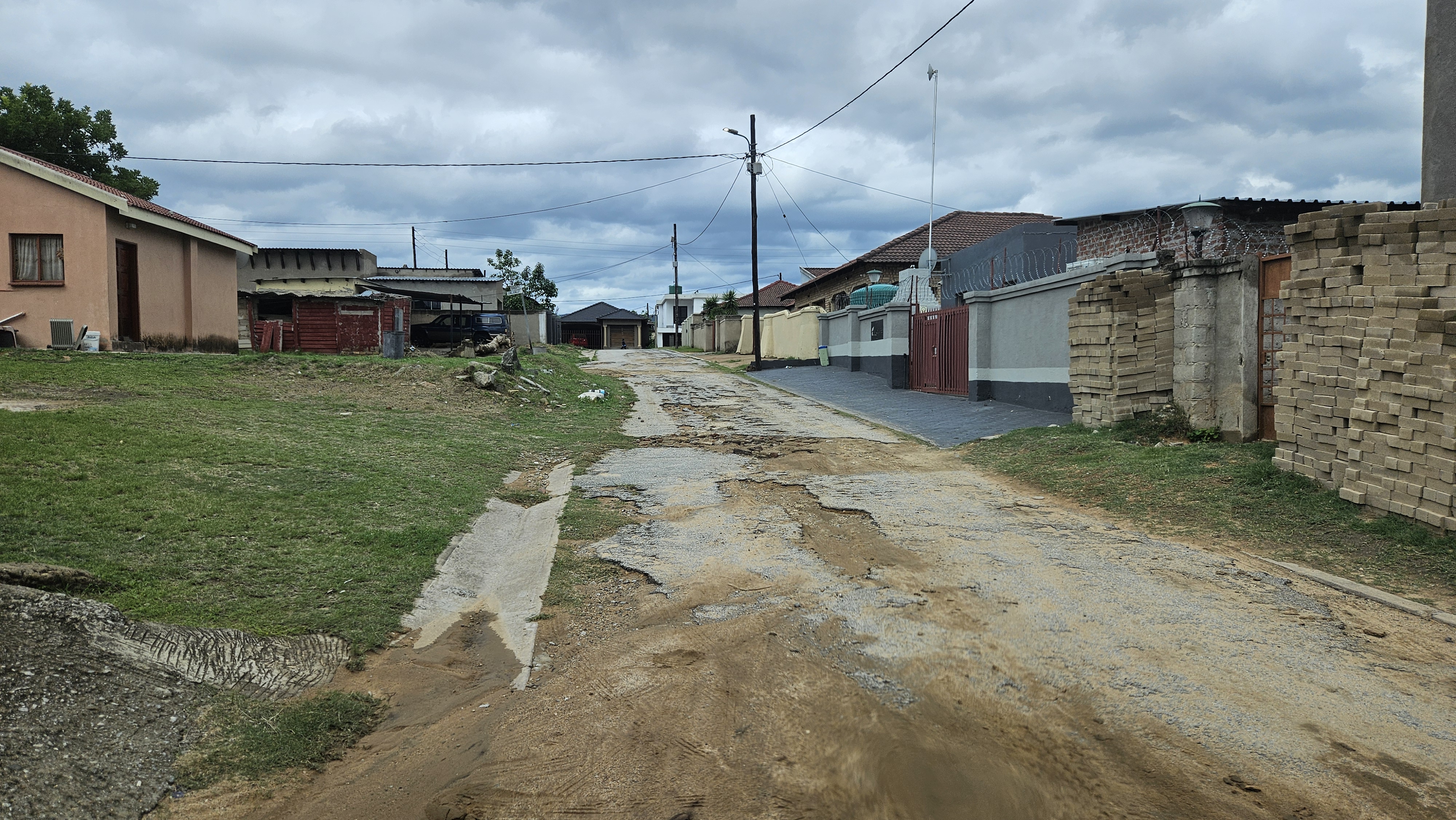
A street, located next to the Crocodile River in KaNyamazane: The infrastructure and houses are vulnerable. Floods can cause significant damage.
The framework is well designed, but – as so often – the difficulties lie in implementation, especially visible during crises. This is also the case in the South African province of Mpumalanga, which has Mbombela as its capital. Limited budgets, gaps in technical expertise, informal or poorly connected settlements, and competing political priorities hamper effective action. For us and our partner AWARD, disaster risk reduction (DRR) is central. But local and provincial authorities must juggle scarce resources while also addressing high youth unemployment, safety concerns, uneven access to healthcare, costly education, and more. DRR is thus not always at the top of the agenda. Within this environment, AWARD has been focusing on three areas to improve the safety of vulnerable, often overlooked communities:
1. Strengthening the technical system for risk management and early warning
In the Inkomati basin, the Inkomati-Usuthu Catchment Management Agency (IUCMA) provides key data such as dam levels, soil moisture, and river conditions. The IUCMA already works with other authorities using a number of risk management platforms, including one developed by AWARD (namely, the Integrated Water Resources Decision Support (INWARDS) system). AWARD supports further development of INWARDS and adapts outputs for different user groups. However, INWARDS is primarily designed for decision-makers and managers in the water resource sector and is complex. Because many institutions lack technically trained staff, for this project AWARD created a more accessible system that incorporates flood, drought, and health risk layers, called the Multiple Hazard Early Warning System (MultiHEWS). Authorities have shown strong interest since effective early warning systems are urgently needed.
2. Shaping the institutional landscape
As the framework shows, many actors at various levels must work in sync for risk management to function. To this end, AWARD engages provincial, district, and municipal stakeholders to deepen understanding of DRR, promote the new MultiHEWS platform, and strengthen coordination. Over the course of the project, exchanges have taken place in bilateral workshops, disaster risk management (DRM) committee meetings, conferences, and other platforms. Here too, organizational networks and structures look clear on paper, and several Memoranda of Understanding and cooperation agreements have been concluded. AWARD’s efforts have boosted institutional capacity and improved knowledge sharing and responsiveness in the region.
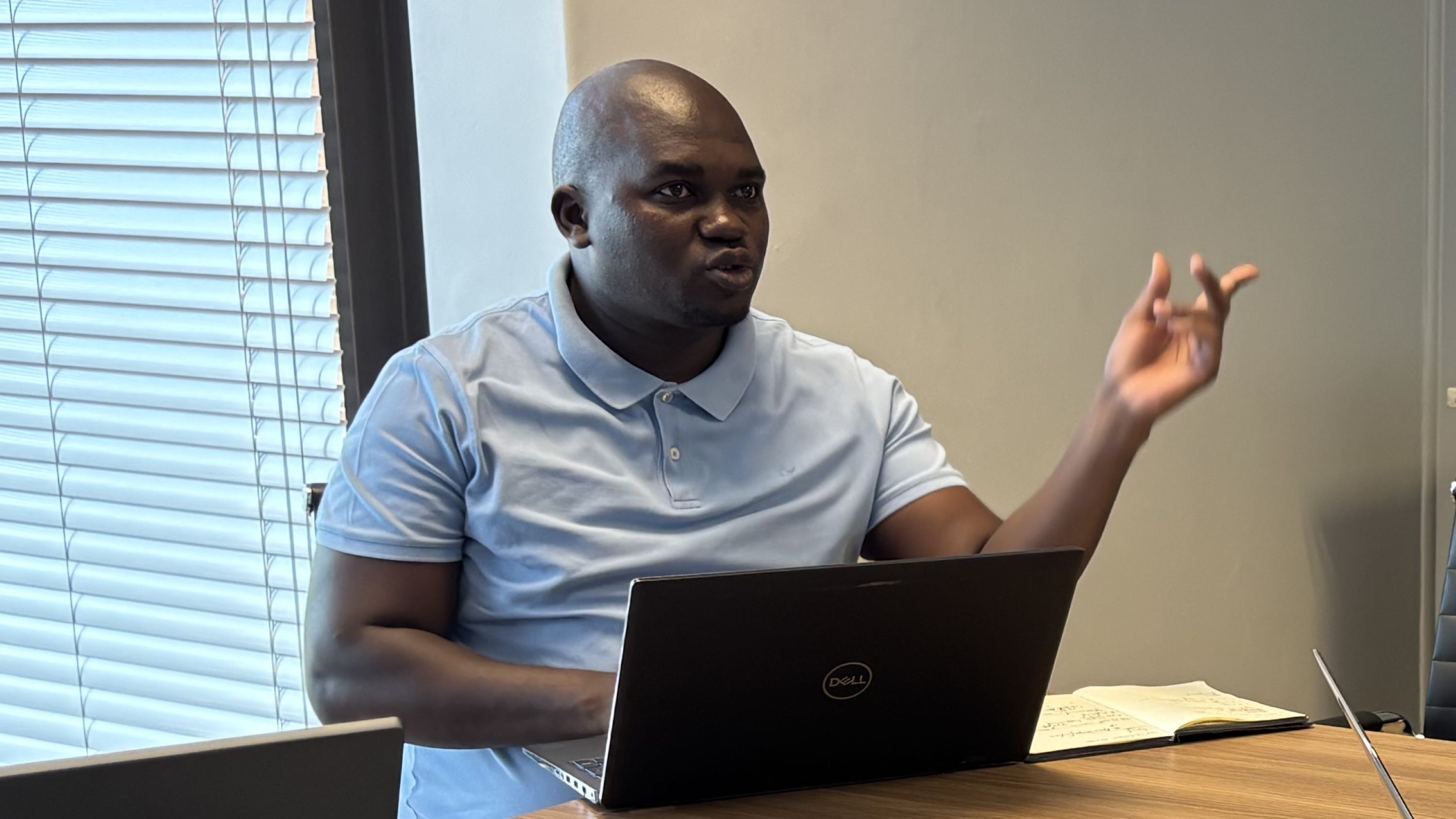
Sipho Magula, Senior Scientist (Hydrology) at the IUCMA, provides feedback on the draft dashboards in the new MultiHEWS platform.
3. Risk perception and outreach to vulnerable communities
The “last mile” in disaster risk management refers to the often most difficult step in getting warnings and support to vulnerable communities. AWARD works with several tools here: through the FlowTracker app, residents can report rainfall, water levels, pollution, and other indicators to AWARD and IUCMA – data that feeds into INWARDS. This citizen science approach broadens the evidence base. AWARD also surveyed four river communities on risk perception, awareness, and preparedness. The findings are concerning: most residents say they receive little to no information on DRM systems and rarely get warnings. This highlights a critical issue – target-group-appropriate communication. While INWARDS relies on digital channels (dashboards, apps, emails), many residents lack mobile data. They learn of danger far more reliably via radio or community meetings –yet these channels remain under-utilised.
Lyncia Mkhabela, Head of Disaster Management within Mbombela’s Public Safety Services shows great interest in the new MultiHEWS.
She points out that easy-to-understand communication to the people at risk is a core – yet still underestimated – task in risk management.
According to the DRM framework, district authorities should pass the warnings to community councillors. But in our project region, alerts often fail to reach the ground. Reasons vary: some councillors are unaware of their role, some are disengaged, some struggle to interpret warnings, others cannot be reached. Even where councillors understand the warnings, none of the communities surveyed had standard operating procedures (SOPs) to trigger protective action.
Next steps
In project areas 1 and 2, notable progress has been made, but the last mile remains insufficiently integrated in the regional risk management and requires follow-up. The surveys paint a clear picture: warnings are not reaching those at risk. Residents want alerts broadcast via radio and explained in community forums. This gap remains unresolved. Authorities told us that awareness-raising among residents is needed first, but they lack the resources to tackle this challenge. They see this as a task for NGOs. AWARD, however, rightly notes that warning dissemination is a state responsibility, especially to avoid panic or misinformation. A way forward could lie in structured public–civil society partnerships.
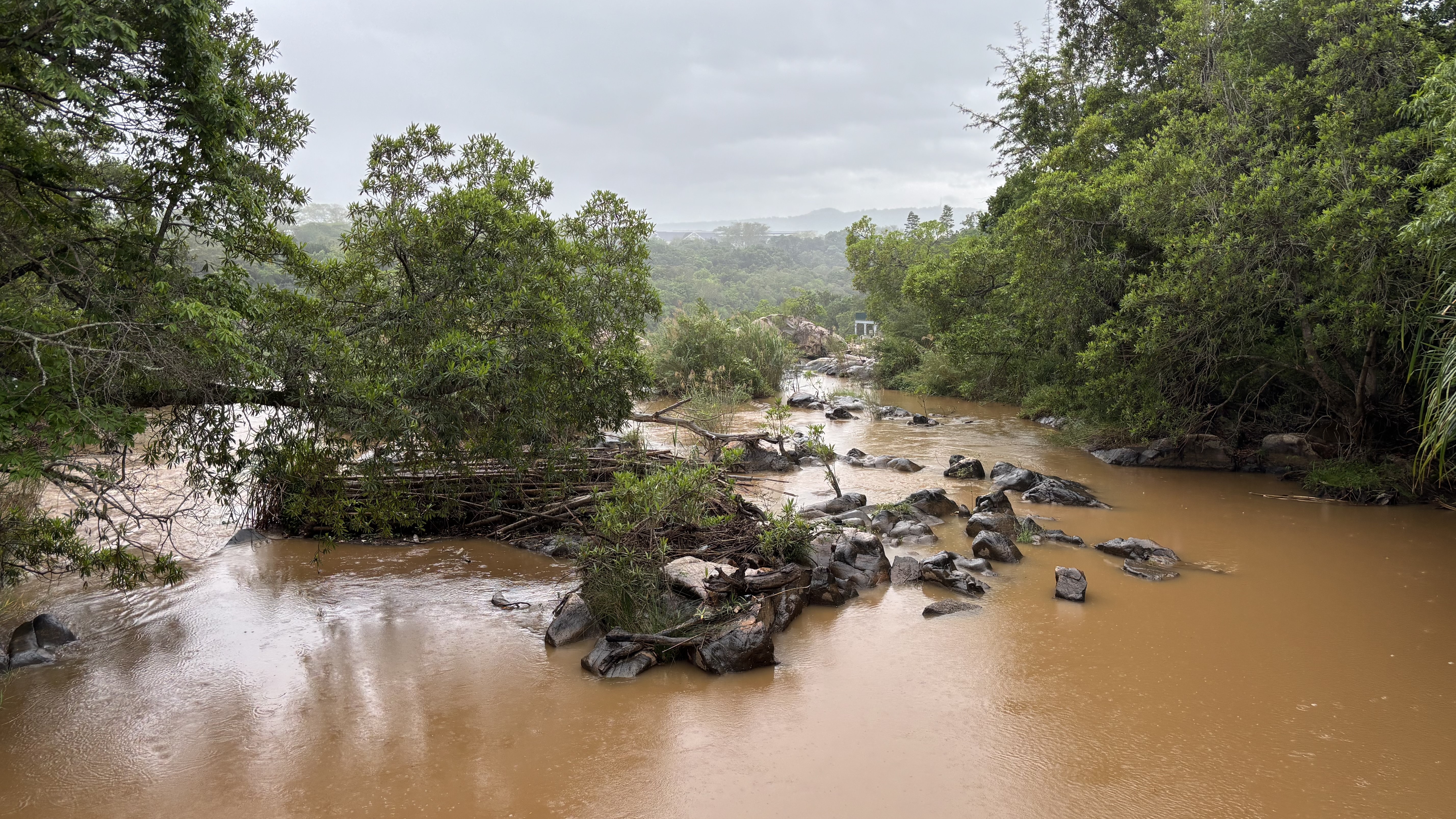
During the rainy season, rivers in the region often swell into raging torrents – with corresponding risks for the local population.
Our project with AWARD runs until April 2026. By then, we hope to have a clearer path toward improving last-mile communication. AWARD has already committed to developing solutions. It will also be crucial to secure continued funding to sustain the progress achieved. More on this in the first half of 2026 – stay tuned.