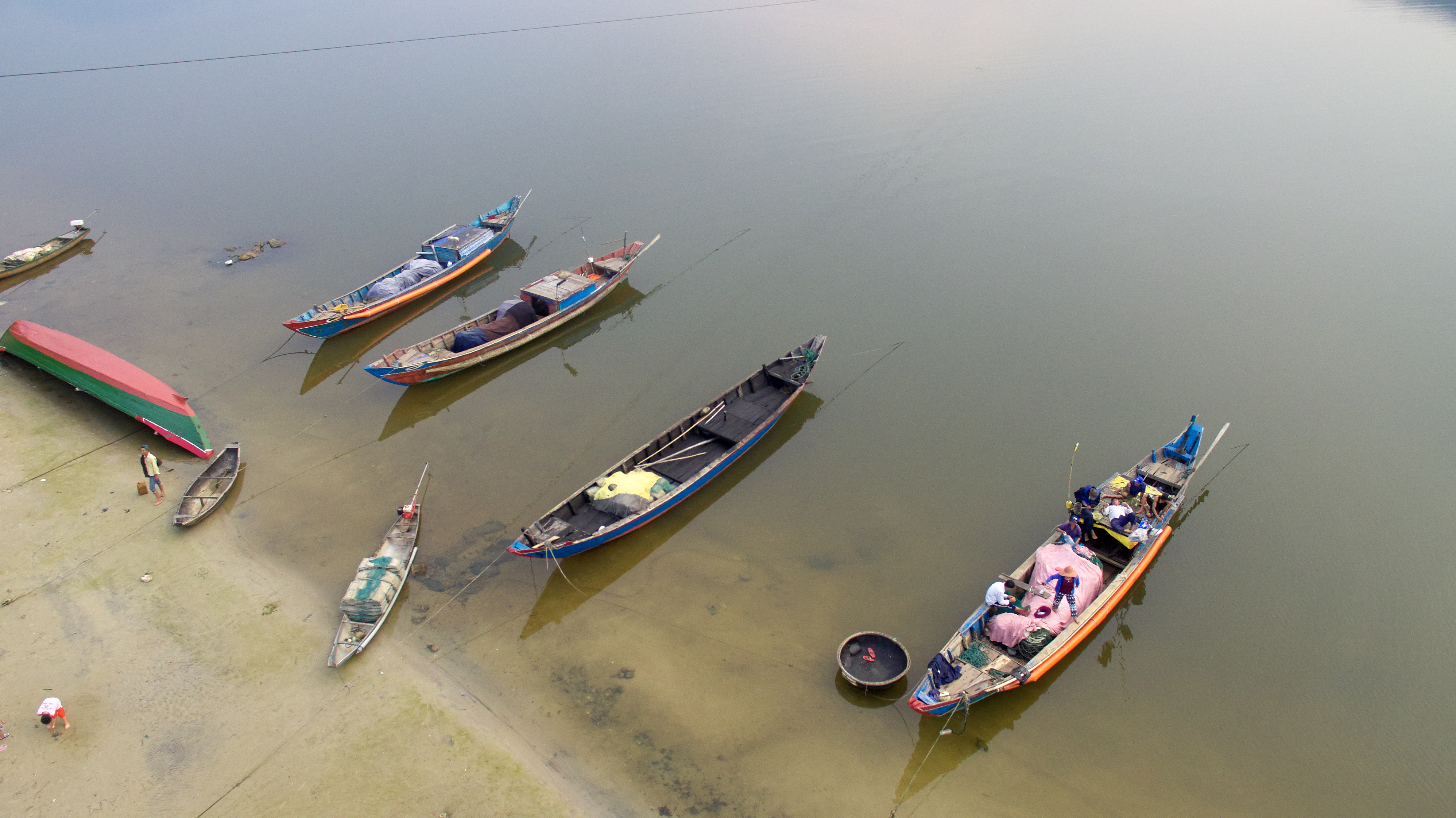
.jpg/_jcr_content/renditions/crop-16x9-2560.jpg./crop-16x9-2560.jpg "View of a waterway with many planted mangroves and fishing boats")
Community learning, women’s empowerment and mangrove restoration
Update from the ‘Strong Roots, Strong Women’ project
Over the summer of 2026, our ‘Strong Roots, Strong Women’ project continued its activities to strengthen the climate resilience of coastal communities in Vietnam. The team focused on two complementary approaches: first, empowering women with knowledge and practical skills in ecosystem-based adaptation (EbA) and nature-based solutions (NbS); and second, restoring natural ecosystems through mangrove planting. The latest activities show how community learning and nature-positive action can work together to advance climate change adaptation.
From knowledge to action: women leading climate resilience
What does climate adaptation look like in everyday life? In the ‘Strong Roots, Strong Women’ project, the answers came from local women themselves. From May to August, community training sessions were held for 20 local groups across the expanded province of Hue. The majority of the participants were women. They deepened their understanding of EbA, NbS, and green livelihood opportunities. Rather than relying on lectures, the sessions encouraged participants to develop solutions themselves. Complementary training in different forms of communication also equipped the groups to share key messages about EbA and NbS within their communities. Strengthening women’s knowledge and skills in disaster preparedness and sustainable livelihoods is particularly important, as women often play a central role in managing household resources and building community resilience.
Building on this knowledge, participants developed creative communication formats such as theatre performances, drawings and short films. Presented to wider audiences, these contributions sparked discussion about environmental protection and practical measures to strengthen disaster resilience.
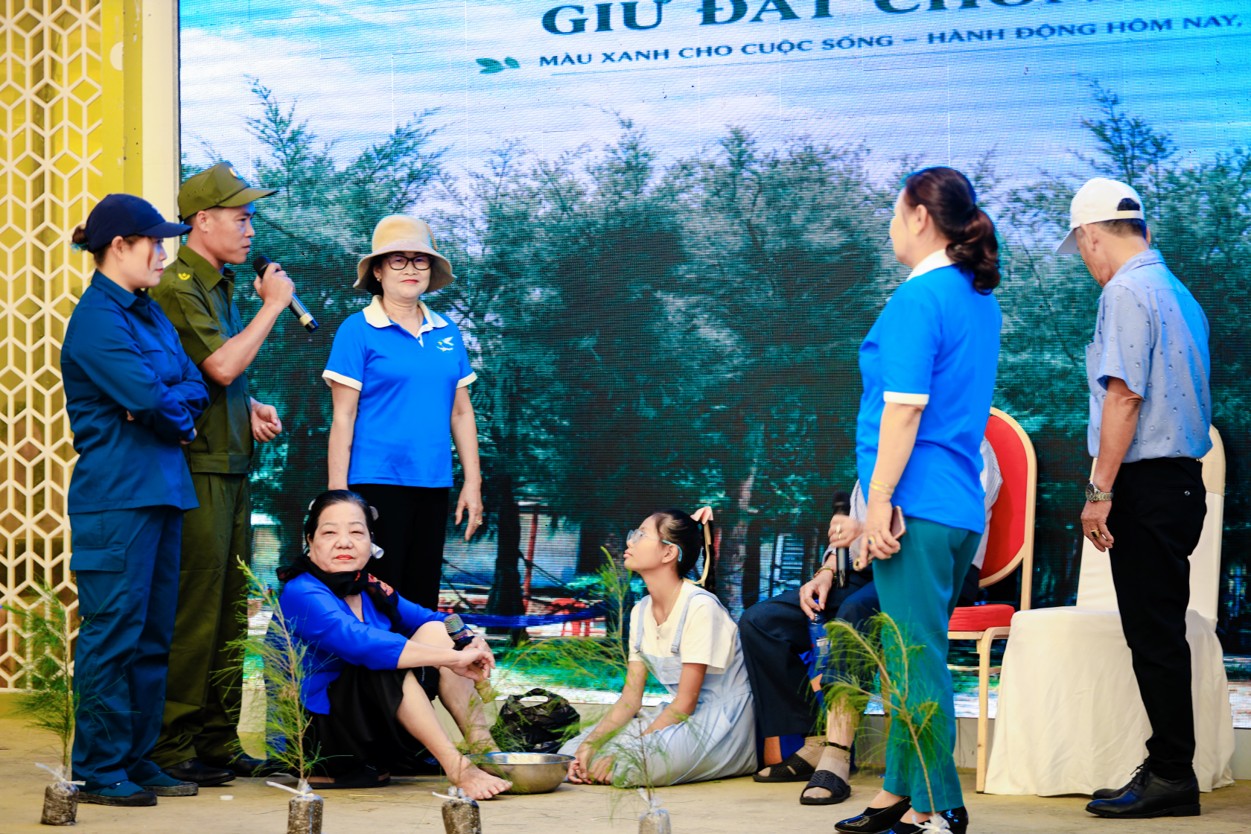
Theater plays can be a powerful tool for awareness raising
A few inspiring examples:
1. The Call from the Earth
Through dramatic scenes of heavy rain, storms, thunder and lightning, the play challenged the idea that people must passively accept whatever nature brings. Instead, it encouraged the audience to prepare proactively and adapt through knowledge, solidarity and nature-friendly solutions. These included planting trees, preventing waste from entering rivers, separating waste at source and stocking essential supplies before storms and floods occur.
2. The Storm is coming – Don't be complacent!
This performance centres on a man who remains complacent about an approaching storm while his wife proactively prepares food, drinking water and other essential supplies. Despite repeated evacuation warnings from the local authorities, he fails to recognise the danger. Only after being rescued in the aftermath of the storm does he understand the consequences of his inaction. Combining an engaging narrative with practical lessons, the play highlights the importance of disaster preparedness and community awareness.
3. Waste separation at source
This community-produced video raises awareness of proper waste separation. It shows residents how to identify and separate different types of waste and explains the environmental benefits as well as the advantages for waste collection and treatment. The video also addresses common misconceptions and harmful habits, such as putting all waste into a single bag, assuming that separation is solely the responsibility of waste collectors, or separating waste only when reminded. Proper separation and disposal are especially important during heavy rainfall: discarded waste can block drainage channels and constrict river flows, rapidly worsening flooding.
Together, these contributions demonstrated the power of peer-to-peer learning, with women acting both as participants and as advocates for resilience in their communities.
Mangrove planting in Phú Lộc Commune
.jpg/_jcr_content/renditions/crop-16x9-1280.jpg./crop-16x9-1280.jpg "Mangrove planting activity in Phú Lộc Commune")
.jpg/_jcr_content/renditions/crop-16x9-1280.jpg./crop-16x9-1280.jpg "Women Planting Trees in Shallow Water")
.jpg/_jcr_content/renditions/crop-16x9-1280.jpg./crop-16x9-1280.jpg "Fishermen planting mangroves in a river landscape")
.jpg/_jcr_content/renditions/crop-16x9-1280.jpg./crop-16x9-1280.jpg "Planting Mangroves in Shallow Water")
.jpg/_jcr_content/renditions/crop-16x9-1280.jpg./crop-16x9-1280.jpg "Fisherman on a boat collecting branches in calm waters")
Growing roots for the future
While awareness-raising activities were taking place in community spaces, restoration work was also progressing in the wetlands and along the coast.
One of the project’s key goals is to ensure a reliable supply of mangroves for restoration and reforestation through its nursery, a core component of ‘Strong Roots, Strong Women’. By May 2026, 15,000 seedlings had been planted in the nursery, meeting the target for the year. Despite extremely high temperatures and comparatively low water levels, the young mangroves are thriving. Once established, they are expected to help reduce flood and erosion risks while supporting biodiversity. In July, the Center for Social Research and Development (CSRD) and volunteers also planted 6,000 larger mangrove saplings in the coastal zone of Phú Lộc Commune. The team had hoped to use plants raised in its own nursery in 2025. However, extreme flooding in November 2025 destroyed most of that year’s nursery stock, so the 6,000 saplings used for the coastal planting had to be sourced externally. The project aims to use trees from its own nursery for planting activities in 2027.
After a challenging 2025, marked by several disasters and administrative changes, including municipal reforms, the project is progressing much more according to plan in 2026, and we look forward to the next phases. Among other activities, we plan to start developing alternative green livelihood opportunities at the beginning of 2027.
7 October 2026
.jpg/_jcr_content/renditions/crop-2x1-2560.jpg./crop-2x1-2560.jpg "Men planting mangroves in shallow water")




.jpg/_jcr_content/renditions/crop-16x9-1280.jpg./crop-16x9-1280.jpg "Navigating a flooded street in a small boat")
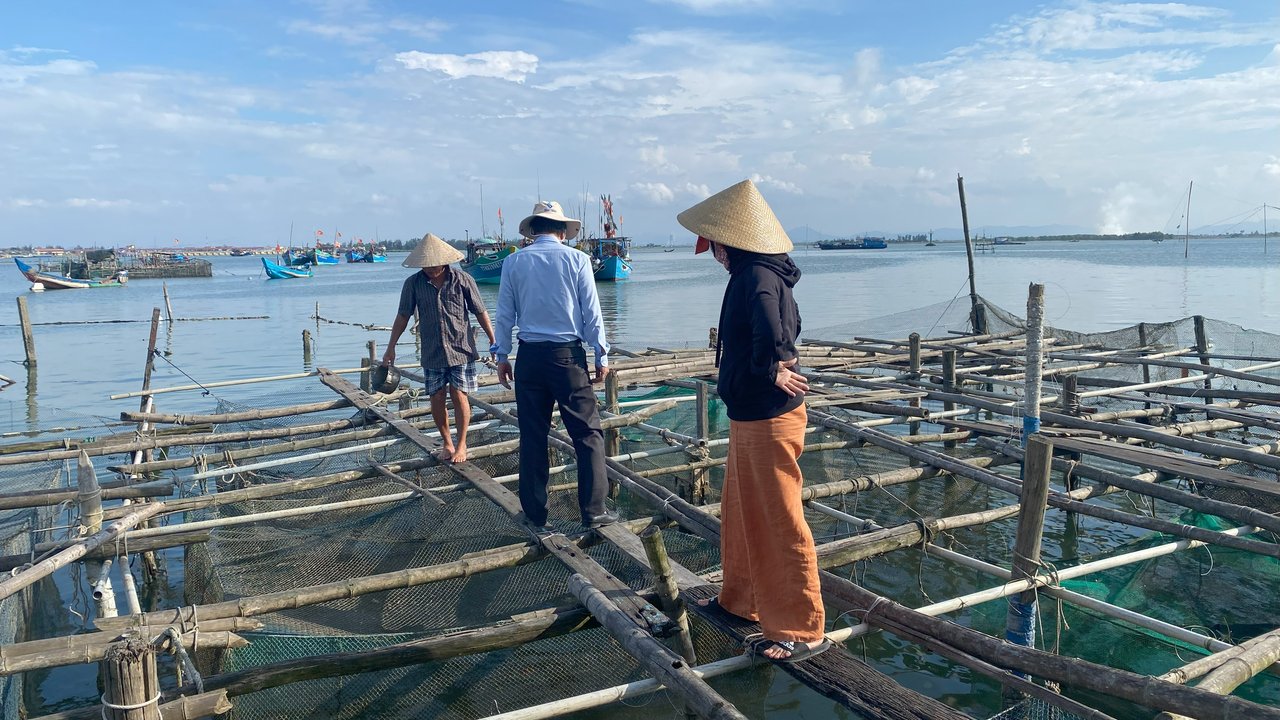
.jpg/_jcr_content/renditions/original.image_file.7008.3942.0,365,7008,4307.file/2026%20Strong%20Roots%20Strong%20Women%20-%20Fieldtrip%20Mekong%20(1).jpg "Group of people on a wooden bridge in nature")