Nuclear energy for climate protection?
Future solution or misguided investment?
Dialogue Forum in cooperation with the Catholic Academy in Bavaria
29 October 2026 I Munich
The discourse surrounding nuclear energy is polarised. This nearly CO₂-free method of electricity generation is offset by safety risks, high costs and the unresolved issue of final disposal of radioactive waste. Can nuclear power contribute to balancing security of supply with the urgently needed shift away from fossil fuels, as long as renewable sources cannot reliably fill the energy gap? This question was the subject of a heated debate among the panel at the Dialogue Forum.
Germany in 2026: When the sun shines and the wind blows, renewable energy sources often produce more electricity than the country can consume. During periods of dark doldrums, however, electricity generation from wind and solar energy is significantly lower. “Periods of dark doldrums can last for weeks at a time; this cannot be compensated by battery storage,” said Prof. Dr Winfried Petry, former Scientific Director of the Munich Research Reactor 2 at the Technical University of Munich. At times, renewable energy sources cover only 15 per cent of electricity demand. Because coal and gas then have to step in, CO₂-equivalent emissions from German electricity generation have fallen over the years from around 600 to 400 grams per kilowatt-hour, despite high levels of investment in wind and solar energy.
Nuclear energy as a complement to renewable energy
Petry argued that Germany is largely isolated in Europe due to its decision to phase out nuclear power. Many other countries rely on a combination of renewable energy and nuclear power, primarily in the form of conventional nuclear power stations. In his view, new nuclear technologies such as fast breeder reactors, small modular reactors (SMRs) or even nuclear fusion could also be used in the future. “This would enable us to organise energy supply in a way that is free from greenhouse gases, economical and efficient.”
However, Petry acknowledged that this was not expected to happen sooner than 2040. Furthermore, the construction of new nuclear power stations is expensive and associated with higher system costs. In his view, however, a supply based entirely on renewable energy would increase costs even further. “I see nuclear energy as a complement to renewables,” he concluded. Until new nuclear power stations come on line, Petry believes that gas-fired power stations will continue to be necessary. With regard to the target year of 2045, Petry said: “We will not be CO₂-free by 2045, unless at extremely high costs.”
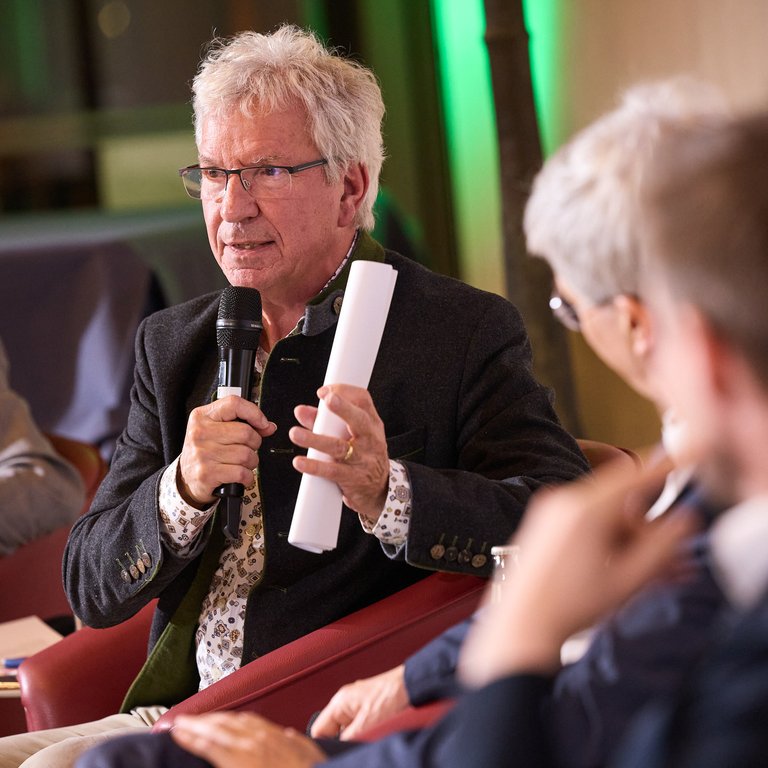
I see nuclear energy as a complement to renewables
“New reactors are coming too late”
The opposing view was put forward by Dr Alexander Roth, an Affiliate Fellow at the Brussels-based think tank Bruegel, who researches the future viability of nuclear energy in a European context. His main objection: “Although nuclear power is low-carbon, new reactors are coming too late to make a significant contribution to achieving the EU’s climate targets.” Added to this, geopolitical tensions pose additional security risks for nuclear power stations. Climate change, too, could mean that plants would have to be shut down more frequently in future due to heat or water shortages. In his analysis of costs, Roth focused on conventional nuclear power stations, as there is insufficient data available for newer technologies and the calculations depend even more heavily on specific assumptions.
In the case of conventional nuclear power stations, system costs must include not only construction costs but also interest, construction times and future capacity utilisation. The body of research is inconclusive: “Some studies show that system costs rise as a result of nuclear power, whilst others show that they fall or remain the same. It is therefore difficult to make a reliable statement here,” he noted. Unlike renewable sources, nuclear power offers little flexibility due to its long construction times. His conclusion: “From the current perspective, nuclear power stations cannot substantially reduce the costs of energy generation nor make a significant contribution to climate protection.”
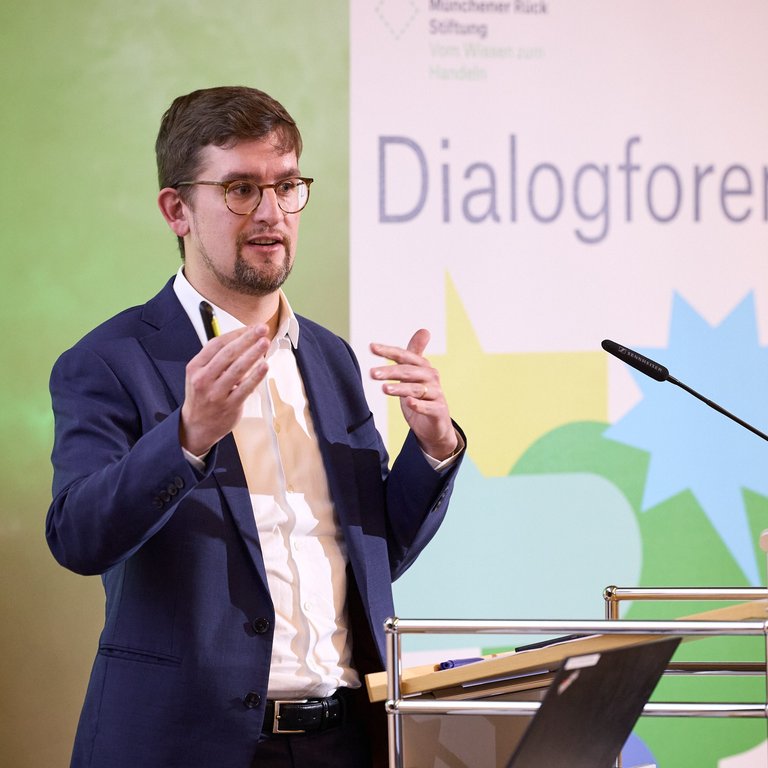
New reactors will come too late to make a significant contribution to achieving the EU’s climate targets
Is nuclear energy ethically justifiable in the face of climate change?
Can ethical considerations help answer the question of whether Germany should turn to nuclear energy again to slow down climate change? This is a difficult question, conceded Dr Markus Vogt, Professor of Christian Social Ethics at Ludwig Maximilian University in Munich. For decades, there has been particularly heated debate in Germany over the ethical assessment of nuclear energy.
“Climate change is the greater risk; it is happening now and is not merely a potential threat. If phasing out nuclear energy leads to us increasingly compensating for this with fossil fuels, I do not consider that to be ethically acceptable”, he explained. However, he added that this is no longer the current scenario, as Germany has already shut down its nuclear power stations. Ultimately, he said, even ethics cannot provide a straightforward answer. Rather, the question is what priority should be given to weighing up the pros and cons compared to a categorical ‘no’.
Dr Alexander Wimmers, a research fellow at the Institute for Economics and Business Law at the Technical University of Berlin, advocated a pragmatic approach. “The question cannot simply be answered with a ‘yes’ or ‘no’; it is a question of prioritisation. In times of limited budgets and in the face of advancing climate change, what is the most effective and efficient way to decarbonise our energy system?” We must act within the means available to us today, which boils down to renewable energies and storage technologies. "If we decide tomorrow to build a nuclear power plant, it could take 20 years before it is operational” he said, outlining the problem, and added: “I come from the field of economics and infrastructure policy. I believe we should be pursuing economic policy for the 21st century, not for the 20th.”
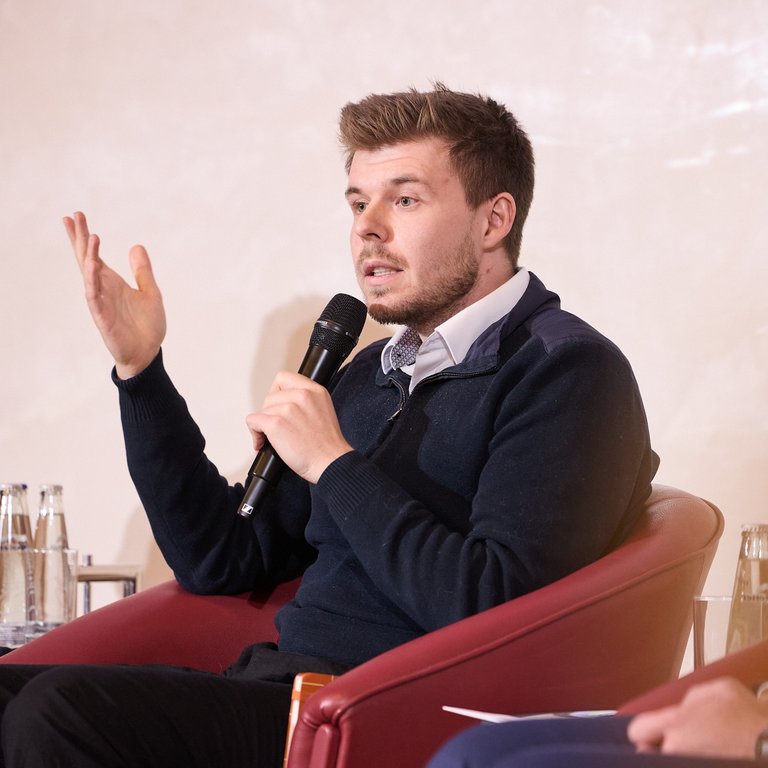
We should be pursuing economic policies for the 21st century, not for the 20th century
More base load or fewer peak loads?
“Let’s be realistic: we don’t have the storage capacity,” Petry countered. “We need base load. Batteries don’t last for weeks, and hydrogen storage is very expensive.” Wimmers replied: “I don’t believe we need base load; rather, we need controllable alternatives or ways to cover peak loads. By definition, base-load power stations are not suitable for this.” Effective levers for achieving this include, for example, reducing grid charges for electricity storage or measures to boost energy efficiency. Demand-side management – that is, controlling large consumers such as washing machines when plenty of electricity is available – is also a good option. “Ideally, we’ll reduce peak loads as much as possible and then run gas-fired power stations for just a few hours a year, which might then be fuelled by hydrogen.”
The unresolved issue of permanent storage
Another issue concerns the decommissioning of nuclear power stations, which can take decades. “Hardly anyone has seriously addressed this,” criticised Wimmers. This complicates the assessment of the total costs, as do the costs of interim and permanent storage, which cannot yet be reliably estimated. Petry, on the other hand, criticised the decision to abandon the Gorleben site and now search for the best possible final repository in Germany. He argued that this approach was wrong. What was needed was a safe final repository, not necessarily the best possible one, he argued, as nobody could know what the world would look like in a million years.
No new wine in old wineskins
The experts at the dialogue forum were unable to agree on a clear answer as to whether nuclear energy is a vision for the future or a bad investment in terms of climate protection. However, they were largely in agreement that further investment in renewable energies is necessary and that research must be driven forward. This research should demonstrate whether technological advances can contribute to a safe, affordable and climate-friendly electricity supply. “But, to put it in biblical terms, you can’t put new wine into old wineskins,” argued Vogt. “At the same time, we need a structural shift towards a more decentralised supply system, and we should link this to a business model based on saving and efficiency.”
The audience’s verdict, however, was clear-cut. At the end of the presentation, almost three-quarters agreed that nuclear energy was a bad investment for climate protection. Only 17 per cent believed it had a future, whilst the rest were undecided. If this also reflects the general mood amongst the wider population, there is unlikely to be a renaissance of nuclear power in Germany.
Panel
Physicist, former Scientific Director of the Research Reactor (FRM II) at the Technical University of Munich
Dr. Alexander Roth
Affiliate Fellow, Think Tank Bruegel, Brussels
Prof. Dr. Markus Vogt
Professor of Christian Social Ethics at Ludwig Maximilian University, Munich
Dr. Alexander Wimmers
Research Associate, Institute of Economics and Business Law, Department of Economic and Infrastructure Policy, TU Berlin
Moderation:
Dr. Martin Dabrowski
Head of Studies in Economics, Social Ethics and Media, Catholic Academy of Bavaria, Munich