Healthy Earth – Healthy People: We don't need to save the climate, we need to save ourselves!
Dialogue Forum in cooperation with the 'Gesunde Erde – Gesunde Menschen' foundation | Summary
27 November 2025
In dialogue with our experts – video series
Mr. von Hirschhausen: Your foundation ‘Gesunde Erde – Gesunde Menschen’ is organising a dialogue forum on climate change and health with the Munich Re Foundation. Why is it important to bring science, politics and the insurance sector into dialogue?
Mr. Orban: Why are we talking about climate change in the context of life and health insurance – what makes this topic so relevant?
Ms. Traidl-Hoffmann: How can we most effectively protect people from the health impacts of climate change?
Ms. Pretzell: The city of Mannheim is a pioneer in urban climate adaptation. In your opinion, which measures are most crucial for protecting public health?
.jpg/_jcr_content/renditions/original./DF20251127_Publikum%20(1).jpg "DF20251127_Publikum_1")
Moderator Prof. Dr. med. Eckart von Hirschhausen in dialogue with the audience
For decades, scientists have warned about rising global temperatures. Yet many people still believe that the consequences lie far in the future, which is why the topic remains abstract and difficult to anchor in people’s minds. Prof. Dr. Eckart von Hirschhausen, CEO of the “Gesunde Erde – Gesunde Menschen” foundation, therefore argues for a different approach: linking climate change directly to the very basics of our lives. "Our health does not begin with a pill, an MRI, or a surgery. It begins with the air we breathe, the water we can drink, plants we can eat, tolerable temperatures, and peaceful coexistence," he explained.
All these fundamentals are in acute danger. It is an illusion to hope that the market will regulate itself as long as a tonne of CO₂ causes damage worth 2,000 dollars but costs only a fraction of that in emissions trading. "Because we are experiencing a world of disinformation and fake news on an unprecedented scale, it is so important to bring informed voices into the discourse who know the figures or have the money we need to make change possible," Hirschhausen demanded.
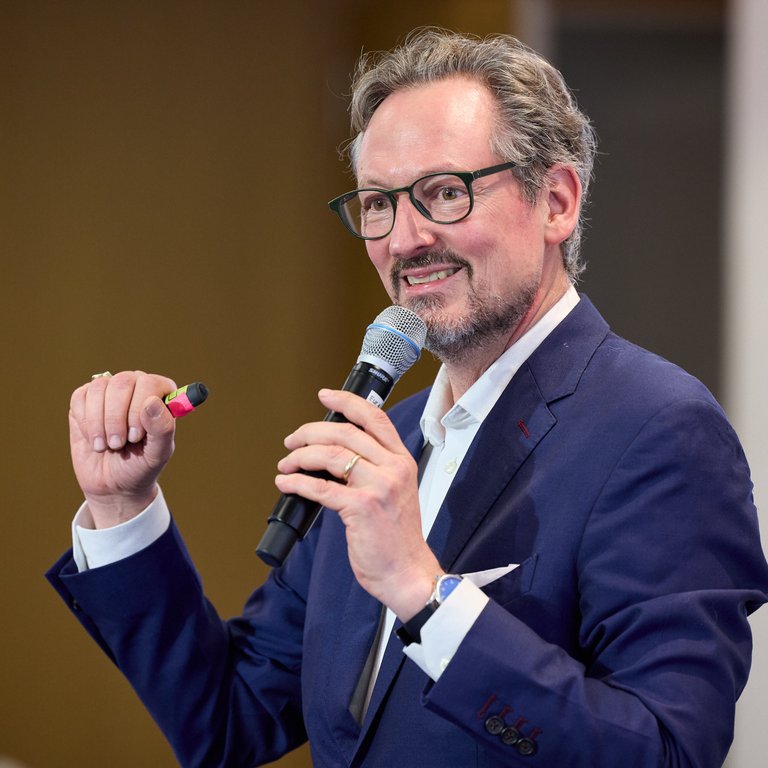
Our health does not begin with a pill, an MRI, or a surgery. It begins with the air we breathe, the water we can drink, plants we can eat, tolerable temperatures, and peaceful coexistence
Heat, allergies and new diseases
One of these voices is Prof. Dr. Claudia Traidl-Hoffmann, Professor of Environmental Medicine at the University of Augsburg. In her view, increasingly hot summers pose a major threat. "The human body can adapt to heat to a certain extent. But once body temperature reaches 42 degrees Celsius, proteins begin to denature," she explained. This process is irreversible, just like cooking an egg. And it is not only older people who fall victim to the heat, but also younger people who work outdoors. A roofer, for example, was admitted to her clinic with a severely elevated body temperature and died of multiple organ failure.
Allergy susceptibility is also rising, largely due to pollen. "Around 30 to 40 per cent of people in Germany are allergic. Climate change is causing more pollen to be released for longer periods of time, and it is also becoming more aggressive," she noted. Invasive species such as ragweed, also known as ambrosia, whose pollen can trigger severe allergies, further exacerbate the situation. Insects such as the Asian tiger mosquito and viruses like the West Nile virus, which has now been detected in Berlin, are also becoming increasingly problematic.
.jpg/_jcr_content/renditions/original./DF20251127_Publikum%20(2).jpg "DF20251127_Publikum_2")
Insurers as an early warning system
Insurers were among the first to recognise the dangers of climate change in the economy. As rising loss trends from natural disasters and growing difficulties in calculating risks put increasing pressure on them, they have become the figurative canary in the coal mine – once used to warn miners of toxic carbon monoxide. Munich Re, for example, has been tracking climate change effects and related risks since 1973.
"We need to understand even better within the insurance industry what climate change means specifically for certain products, such as life insurance or occupational disability insurance," acknowledged Prof. Dr. Mathias Orban, Senior Medical Consultant at the reinsurer. To do this, he said, the possible changes must be quantified so that they can then be incorporated into the calculations. It is already evident today that heat-related excess mortality is rising. "Because every country is different, we need to clarify on a region-specific basis when heat becomes dangerous," said Orban, who is himself a specialist in cardiology. "A key question is whether the number of heat-related deaths will rise so sharply that it outweighs the theoretical decline in cold-related deaths."
Another question is how insurers can raise awareness of the issue beyond their business model. "I see one of our core roles as educating customers about the risks and costs that may lie ahead, even if some of this is not yet well quantifiable," he said. Due to a lack of precise data on the consequences of climate change 15 or 20 years from now, insurers must work with projections, ranges, and scenarios.
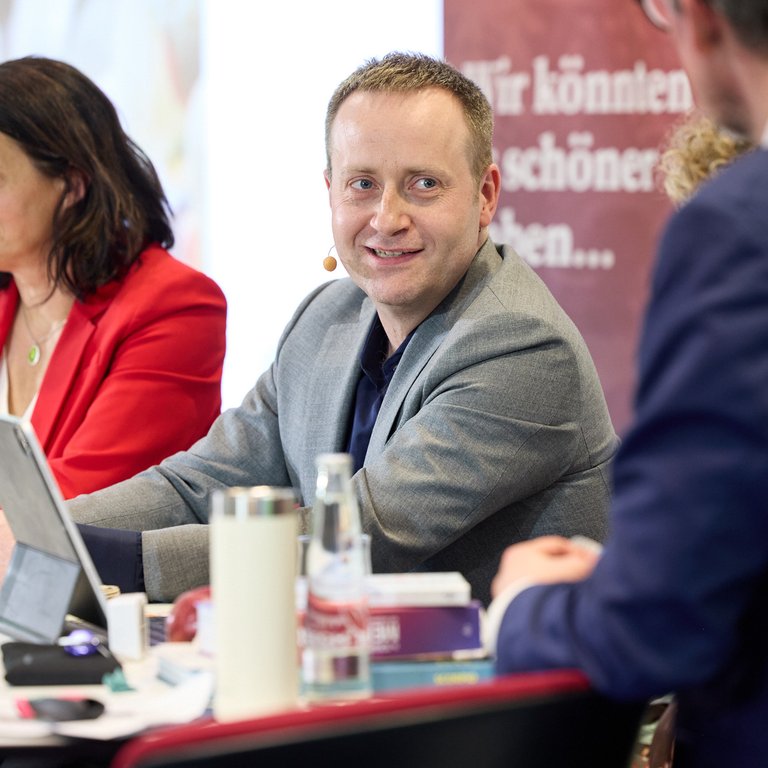
I see one of our core roles as educating customers about the risks and costs that may lie ahead
Mannheim: a model city
When it comes to taking action, Mannheim is a pioneer. In January 2024, the city became the first German municipality to be awarded the EU Mission label for climate-neutral and smart cities. As part of a model project to promote ecological and nature-positive land use, the nearly extinct and highly endangered European hamster was reintroduced, as First Mayor Prof. Dr. Diana Pretzell reported.
In many other initiatives as well, the city aims to lead by example and become climate-neutral by 2030. "We plant 1,000 trees every year, we support the unsealing of inner courtyards and the greening of rooftops, we have a Local Green Deal team that advises local businesses on becoming more sustainable, and we have installed drinking fountains throughout the city," she listed. Health is also high on the agenda. "Our university hospital fills up whenever it gets hot. That’s why we try to guide people to cooler places using a map we developed ourselves." The city would also like to establish a heat hotline for older residents – something that is currently not possible due to data protection regulations.
The costs of achieving climate neutrality are high. "In Mannheim alone, we need three to five billion euros, including climate adaptation, to achieve the target by 2030." Pretzell intends to mobilize funding, among other sources, through the EU. She praised the EU Commission for understanding that cities, together with the private sector, have a major leverage effect when it comes to climate protection. In addition, the federal government is called upon to act within the framework of the joint task on climate change. However, it refuses to pass on EU funds directly to local authorities and instead uses them to plug its own budget gaps . "Only in the local authorities can we achieve concrete climate adaptation. Without us, it won't happen," Pretzell emphasised.
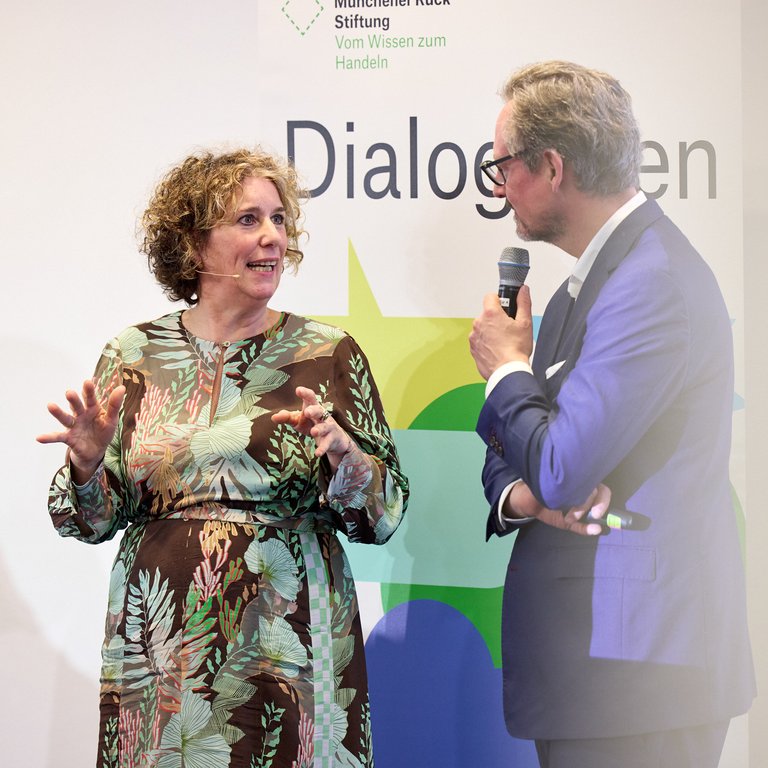
Only in the local authorities can we achieve concrete climate adaptation. Without us, it won't happen
Political Roadblocks and opportunities
The fact that certain political forces are trying to roll back achievements in climate protection, such as emissions trading, does not make the situation any easier. "Emissions trading is a brilliant instrument to put a price on CO₂ pollution," Hirschhausen explained. Combined with a climate dividend paid to all citizens as compensation for rising CO₂ prices, it could increase public support for climate action.
There is no doubt that the climate crisis is endangering millions of lives, whether through natural hazards or health risks. Nevertheless, there is no place for doom and gloom. "I am fundamentally optimistic, because things are also improving," said Orban. The expansion of renewable energies is progressing, and the decarbonisation of energy systems is reducing particulate matter concentrations. "If we have a better understanding of the health effects of different climate risks, we will also be able to adapt better," he added.
Between hope and pressure to act
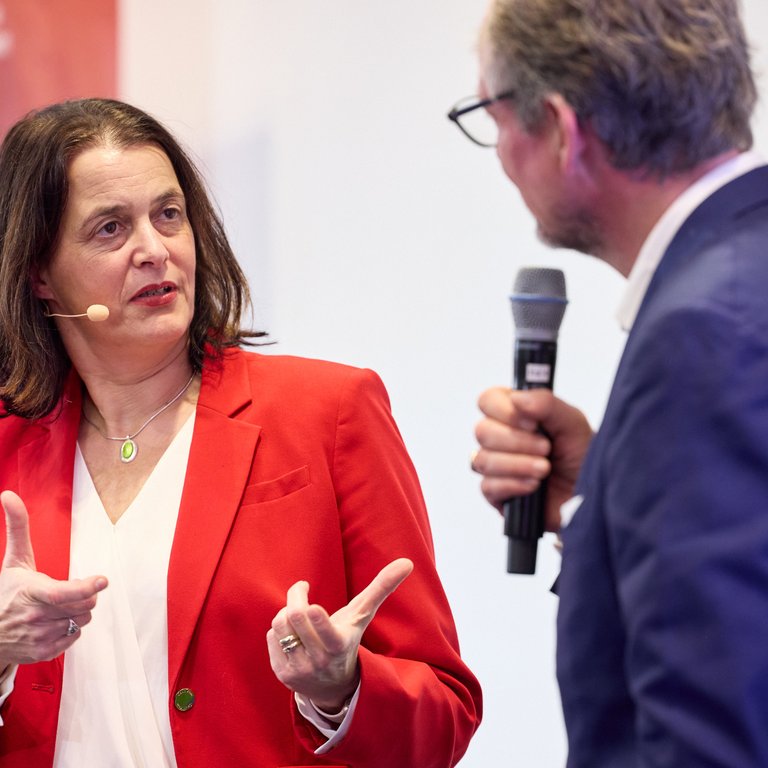
We must pay more attention to prevention and ensure that people stay healthy
Video of the Dialogue Forum (German only)
Panel guests
Prof. Dr. med. Eckart von Hirschhausen
Managing Director of the foundation "Gesunde Erde - Gesunde Menschen", medical doctor and science journalist
Prof. Dr. med. Mathias Orban
Senior Medical Consultant, Munich Re
Prof. Dr. Diana Pretzell
First Mayor of the City of Mannheim
Prof. Dr. med. Claudia Traidl-Hoffmann
Medical doctor, Professor of Environmental Medicine, University of Augsburg, and member of the WBGU Advisory Board
Moderation