.jpg/_jcr_content/renditions/crop-16x9-2560.jpg./crop-16x9-2560.jpg "Community Gathering in Agricultural Field")
"Resilience through regenerative agriculture"
Itanya Africa Group
Project duration: January 2026 - December 2026
In Swahili, Itanya means hope — a fitting name for Itanya Africa Group (IAG), founded in 2023 and based in Nairobi, Kenya. Working with women farmers in the drought‑affected region of Wamunyu in Machakos County, the organization supports communities facing increasing water scarcity and land degradation. Through its three focus areas – regenerative agriculture, improved water access, and gender‑inclusive training – IAG strengthens livelihoods, restores ecosystems, and empowers women to build lasting climate resilience.
In 2023, IAG was selected as one of the winners of the RAIN Challenge, a joint initiative of Munich Re Foundation, Global Resilience Partnership and Shockwave Foundation. The award highlighted IAG’s innovative contribution to strengthening resilience and inclusion in agriculture. Building on this momentum, we continue our support for IAG with additional funding from the Schmitz Stiftung, enabling the organization to expand its activities and deepen its impact through capacity building, climate-smart practices and gender equality.
.jpg/_jcr_content/renditions/crop-16x9-1280.jpg./crop-16x9-1280.jpg "Community Gathering in Agricultural Field")
Capacity building for smallholder women farmers
Strengthening the skills and confidence of smallholder women farmers is at the heart of IAG’s work in Machakos County. The project supports farmers to adopt sustainable farming methods that improve soil health, raise productivity, and increase resilience to climate pressure.
To build up these skills, IAG combines workshop-based learning with hands-on field instructions. Farmers are introduced to regenerative methods such as syntropic agroforestry systems, organic composting, soil building practices that improve yields without chemical inputs, and seed saving to protect local crop diversity. Together, these approaches offer effective, nature-positive solutions to challenges like land degradation, climate stress, and food insecurity.
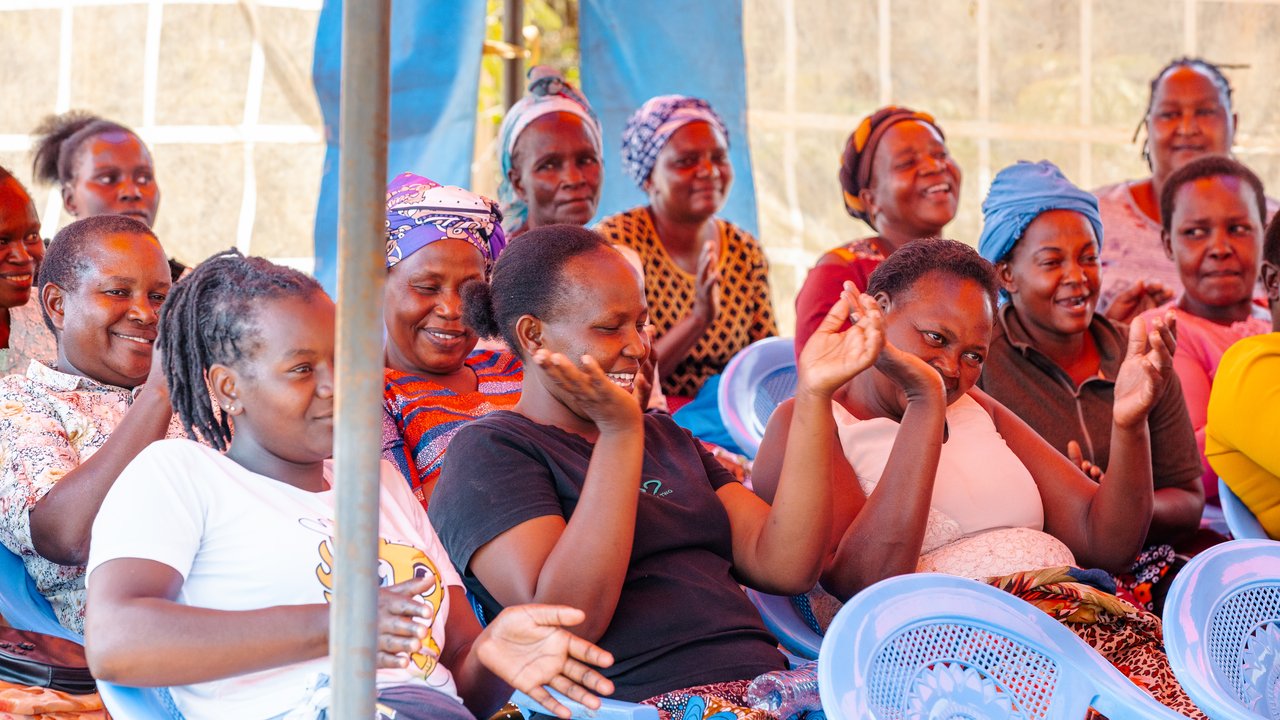
.jpg/_jcr_content/renditions/crop-16x9-1280.jpg./crop-16x9-1280.jpg "Participants Engaging in a Community Workshop")
Women farmers at IAG's community workshop on agricultural practices
.jpg/_jcr_content/renditions/crop-16x9-1280.jpg./crop-16x9-1280.jpg "Aerial View of Lush Agricultural Landscape")
IAG's demonstration farm in Wamunyu
.jpg/_jcr_content/renditions/crop-16x9-1280.jpg./crop-16x9-1280.jpg "Certificate Presentation Ceremony in Community Event")
Certification ceremony for women farmers after attending capacity building workshops
Building resilience through water pans and vertical gardens
Alongside agricultural training, IAG promotes solutions that help farmers adopt to increasing climate variability. In Machakos County, irregular rainfall and recurring droughts pose major challenges for smallholder farmers. To address these, IAG focuses on enhancing water security and supporting climate-adapted food production at the household level.
One key intervention is the construction of water pans – small reservoirs that collect and store rainwater for agricultural use. This water provides a reliable source for irrigation during dry periods and helps stabilize food production throughout the year. Their construction also creates local employment opportunities for young men, who receive training and hands-on experience in building these structures, strengthening both technical skills and community ownership.
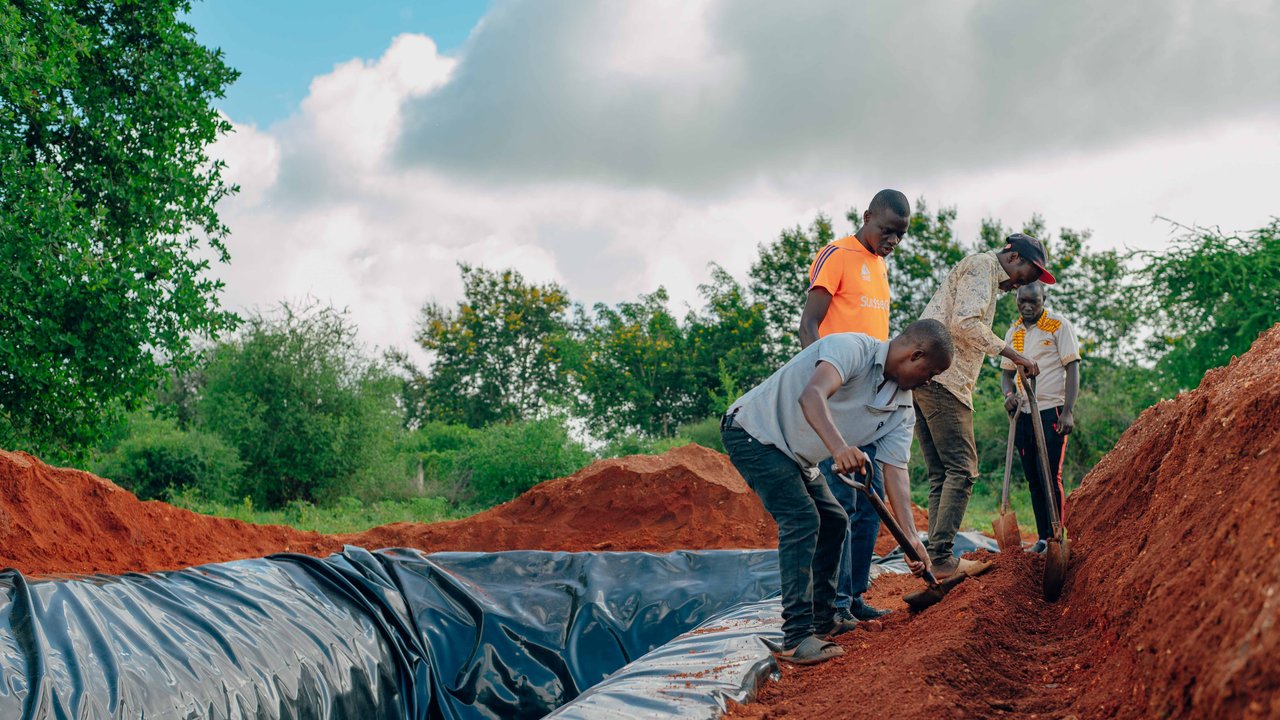
Men in construction of a water pan
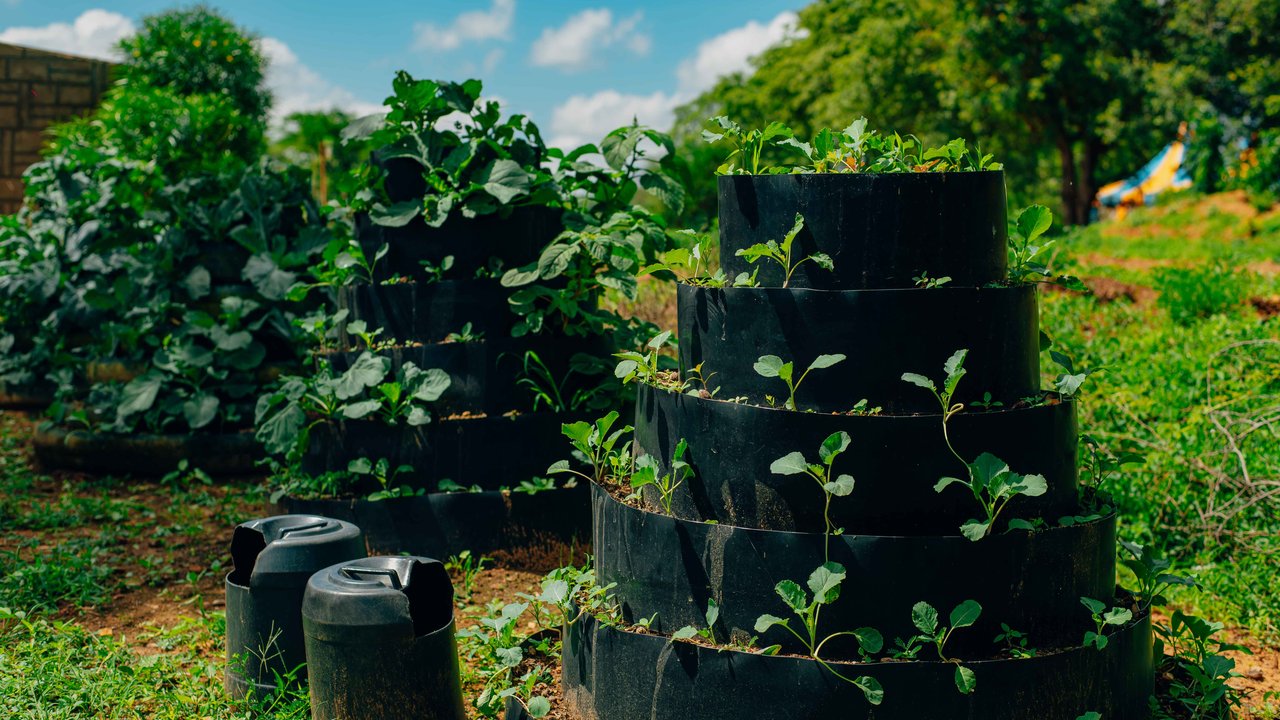
Vertical garden in Wamunyu community
Gender equality and social inclusion
Alongside these technical and environmental initiatives, IAG also works to remove the social barriers that limit women farmers’ ability to fully benefit from agricultural opportunities.
Across all its initiatives, IAG actively addresses the structural challenges faced by many women farmers – including limited access to knowledge, resources, and decision-making opportunities. These barriers often prevent women from strengthening and expanding their agricultural livelihoods.
To counter these obstacles, Gender Equality an Social Inclusion (GESI) principles are integrated throughout the project. By acknowledging the specific constraints women face and applying behavioral insights to support the adoption of new methods, IAG ensures its interventions are gender-responsive, inclusive, and designed to create lasting change.
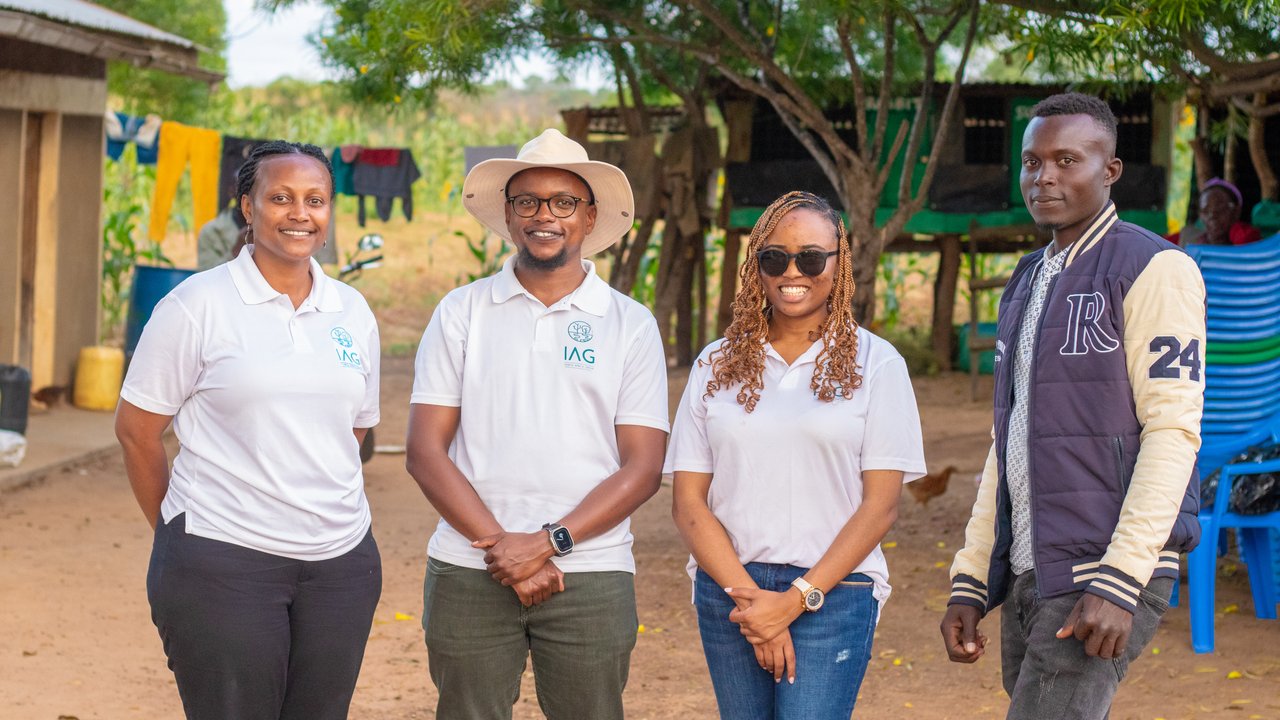
Team of Itanya Africa Group: Caroline Ndaama, Samuel Vaita, Ashley Mutiso, Felix Odongo (from left to right)
Looking Ahead
Beyond the immediate benefits for participating farmers, the project contributes to broader goals of environmental sustainability and community resilience. Improved water harvesting systems and regenerative soil practices help communities use scarce resources more efficiently and cope better with climate stress. As women farmers adopt these methods, agricultural productivity stabilizes, post-harvest losses decrease, and market access improves – creating pathways to fairer pricing and more predictable incomes. These gains, in turn, strengthen household financial security and support access to services such as healthcare and education, improving overall community well-being.
By placing women farmers at the center of its approach, IAG ensures that progress is grounded in local realities and reaches those most affected by climate and economic pressure. Over time, healthier ecosystems, stronger livelihoods, and improved social and economic conditions reinforce one another – demonstrating how regenerative agriculture and gender-inclusive strategies can drive meaningful, lasting change.
News and updates from the project
RAIN Challenge
.jpg/_jcr_content/renditions/crop-2x1-2560.jpg./crop-2x1-2560.jpg "Women Engaged in a Community Meeting")