How Rwanda's National Agriculture Insurance Scheme works on the ground in Rulindo
Field trip of the ICII 2026
23 October 2026
By Antonia Witthoff, Jeff Blacker, Dirk Reinhard and Renate Bleich
Roughly 60 ICII 2026 participants visited Rulindo District to see Rwanda’s National Agriculture Insurance Scheme in practice. Visits to a poultry farm and a farming cooperative showed how insurance helps farmers recover from losses. The field trip was hosted by Rwanda’s Ministry of Agriculture and Animal Resources (MINAGRI) and Ministry of Finance and Economic Planning (MINECOFIN).
The visit took place on Friday, 23 October, the final day of the conference, about an hour’s drive north of Kigali. The first stop was Trusted Farm Ltd in the Mbogo sector, which raises laying hens. The second was COVAMABA in the Bushoki sector, a marshland cooperative whose 3,073 members grow maize, Irish potatoes, beans and vegetables on 261 hectares. Both are insured by Radiant Yacu under the National Agriculture Insurance Scheme (NAIS).
Box 1: Rwanda's National Agriculture Insurance Scheme (NAIS)
Click here for more details
- Launched: April 2019, initially covering livestock only.
- Members: around 250,000 farmers and livestock keepers insured each year.
- Premium subsidy: government pays 40% of the premium; farmers pay 60%.
- Funding: donors finance 70% of the subsidy.
- Premiums since 2019: over US$ 11.5 million, including the government’s share.
- Claims paid since 2019: over US$ 6.3 million, equivalent to 55% of premiums collected.
- Implementation: led by MINECOFIN, with MINAGRI as the user ministry and the districts responsible for day-to-day delivery.
- New products are approved by elected community leaders before they reach farmers.
- Cover: based on the respective farmer’s investment, with losses assessed in the field.
Source for national figures: MINAGRI and RAB, reported by The Comments, 26 May 2026, own research.
The insurer’s vets help farmers avoid losses
Christian Habumuremyi manages Trusted Farm Ltd together with his wife, Providence Dusengimana. They started in 2013 with 1,000 birds; today they keep 7,500 laying hens and collect around 6,500 eggs a day. The farm is insured under the NAIS.
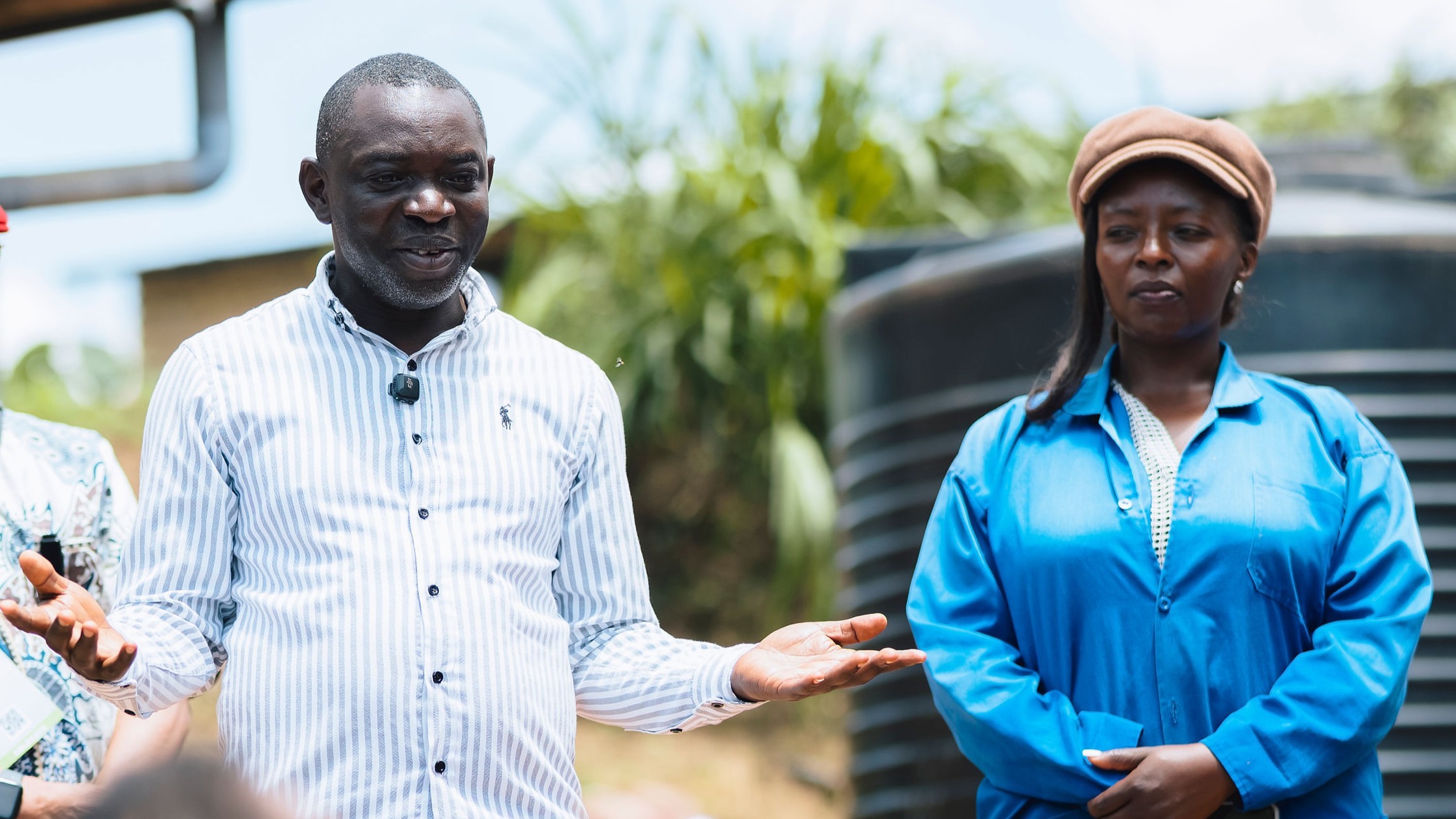
Christian Habumuremyi (left) and Providence Nyransengimana (right) of Trusted Farm Ltd during the ICII 2026 field trip.
Dr. Gloria Mbasinga, Claims Manager at Radiant Yacu and a veterinarian, explained that the insurer’s support goes beyond processing claims. Its field agents, who are also trained veterinarians, regularly visit farmers to share advice on animal health, take part in vaccination days to verify that birds have been vaccinated, and use WhatsApp groups to respond to problems reported by farmers.
Vaccination is also a condition of cover. As Christian Habumuremyi explained, if there is a claim but the insurer finds the birds were not vaccinated as required, it does not pay. When a disease spread across the area, government specialists took samples, identified it and recommended a mass vaccination, which reduced deaths among the birds.
The poultry farmers’ local cooperative encourages farmers to take out insurance and employs a vet who serves all the insured farms, as hiring a vet individually would be too costly for small farms. Joseph Ntezimana Museruka related how vets in Rwanda now work through private companies, with the government retaining a supervisory role.
Payouts made it possible to restock after three outbreaks
Figures provided by Radiant Yacu show insurance payouts in 2023, 2024 and 2026 (Table 1).
| Year | Sum insured (US$) | Total premium paid (US$) | Farmer premium (US$) | Government subsidy (US$) | Payout (US$) | Birds lost |
|---|---|---|---|---|---|---|
| 2023 | 13,888.89 | 763.89 | 458.33 | 305.56 | 7,454.27 | 2,201 |
| 2024 | 17,208.67 | 946.48 | 567.89 | 378.59 | 13,923.17 | 4,110 |
| 2026 | 17,953.93 | 987.47 | 592.48 | 394.99 | 1,373.98 | 406 |
Source: Figures provided by Radiant Yacu. US$ amounts are based on the National Bank of Rwanda exchange rate on 23 October 2026 (US$ 1 = RWF 1,476).
After each payout, the farm was able to carry on. Having insurance also makes it easier for the farm to secure credit when it needs to restock after a loss, Christian Habumuremyi said. Banks are reluctant to issue loans to restock chickens because an entire flock can be lost, but with proof of insurance they are more willing to do so. Of Radiant Yacu, he said: “Without them, we wouldn’t have reached this level.”
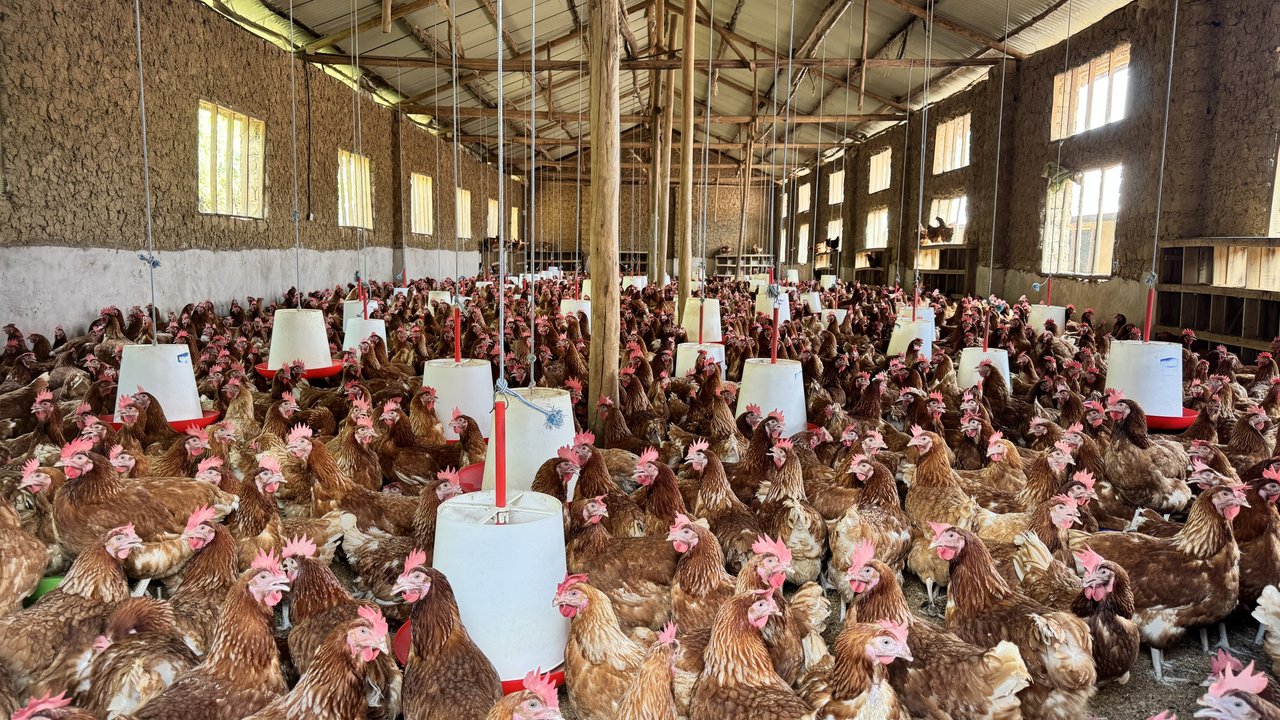
Laying hens at Trusted Farm Ltd, where poultry insurance has helped the business recover from repeated disease outbreaks.
“At the beginning, we couldn’t believe that the insurance company would pay us,” he said. “You can’t trust someone based on nothing.” When he told neighbours about a substantial insurance payout, they did not believe him. “They have paid us three times, so we can say that we trust them,” he said. Asked by participants of the field trip whether his experience with poultry insurance had led him to take out other types of insurance, Christian Habumuremyi said the farm buildings were now insured, he had life insurance, the family car was insured, and he had joined a pension scheme. Everything he and his wife own was now covered “because of that experience”.
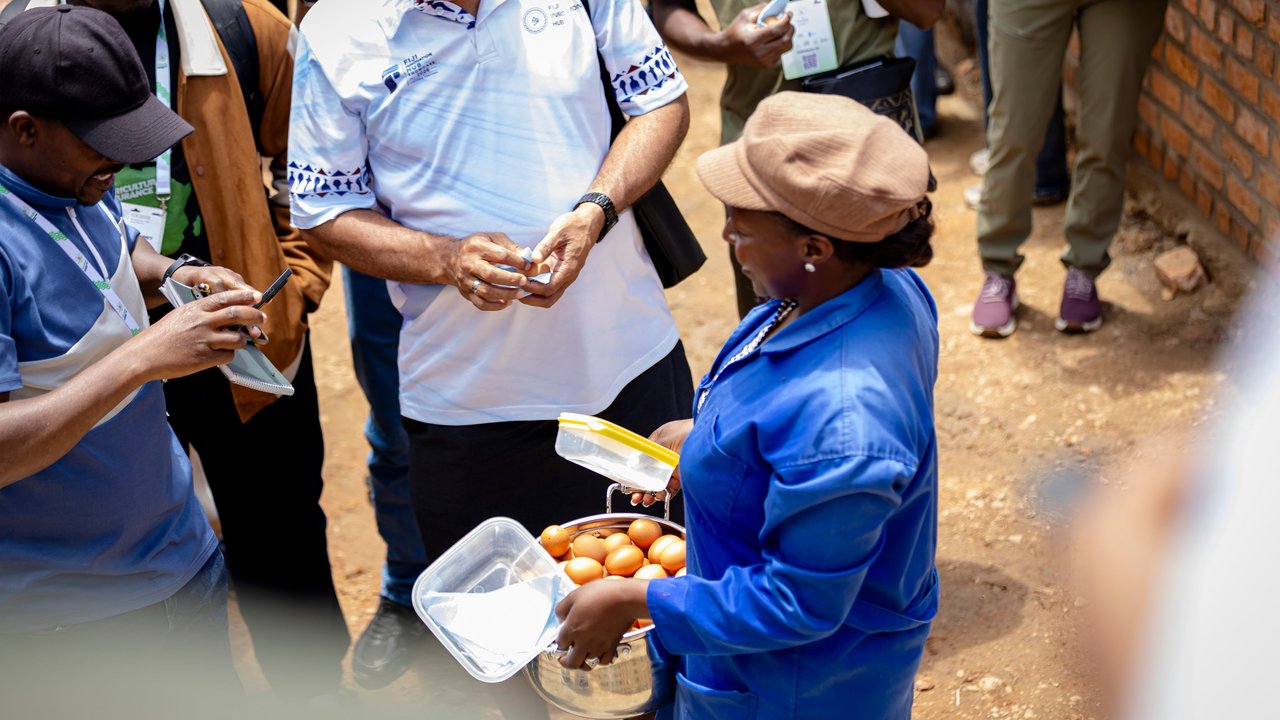
Providence Dusengimana of Trusted Farm Ltd offers participants boiled eggs from the farm during the ICII 2026 field trip. As a gesture of Rwandan hospitality, Christian Habumuremyi explained that guests should not leave the host’s home without being offered something to eat.
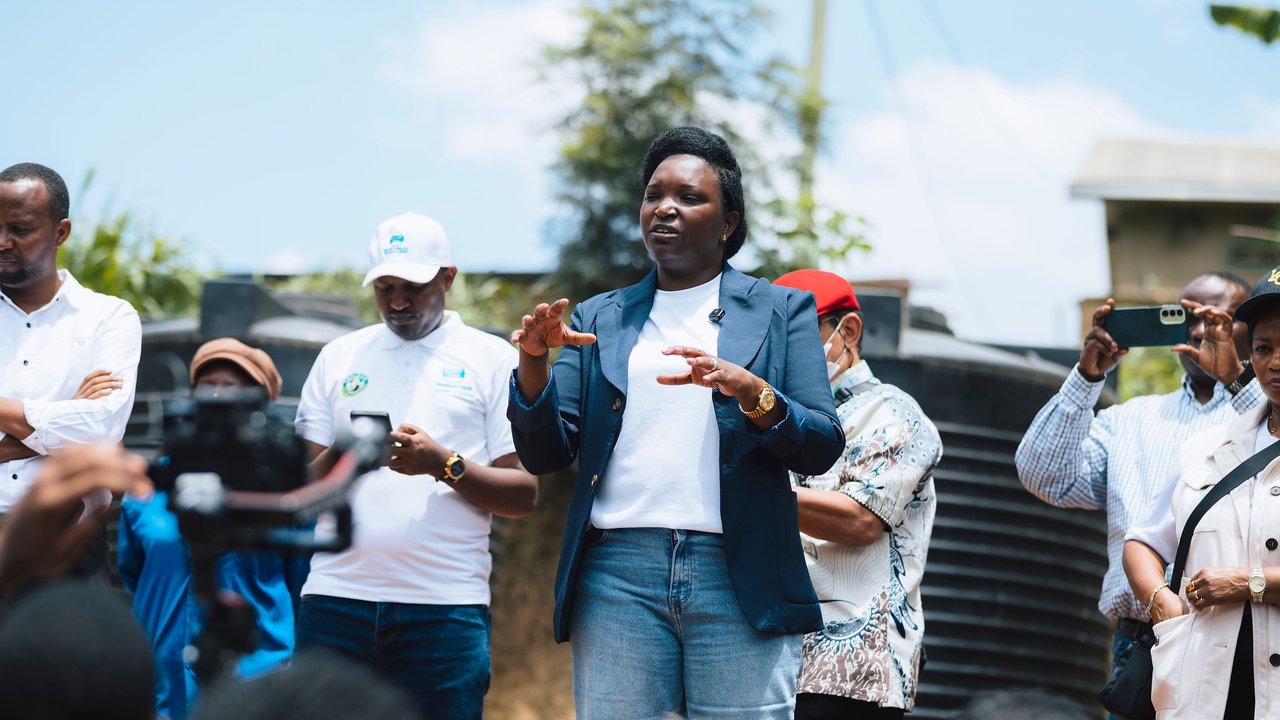
Dr. Gloria Mbasinga, Claims Manager at Radiant Yacu and a trained veterinarian, during a discussion on animal health and risk prevention at Trusted Farm Ltd.
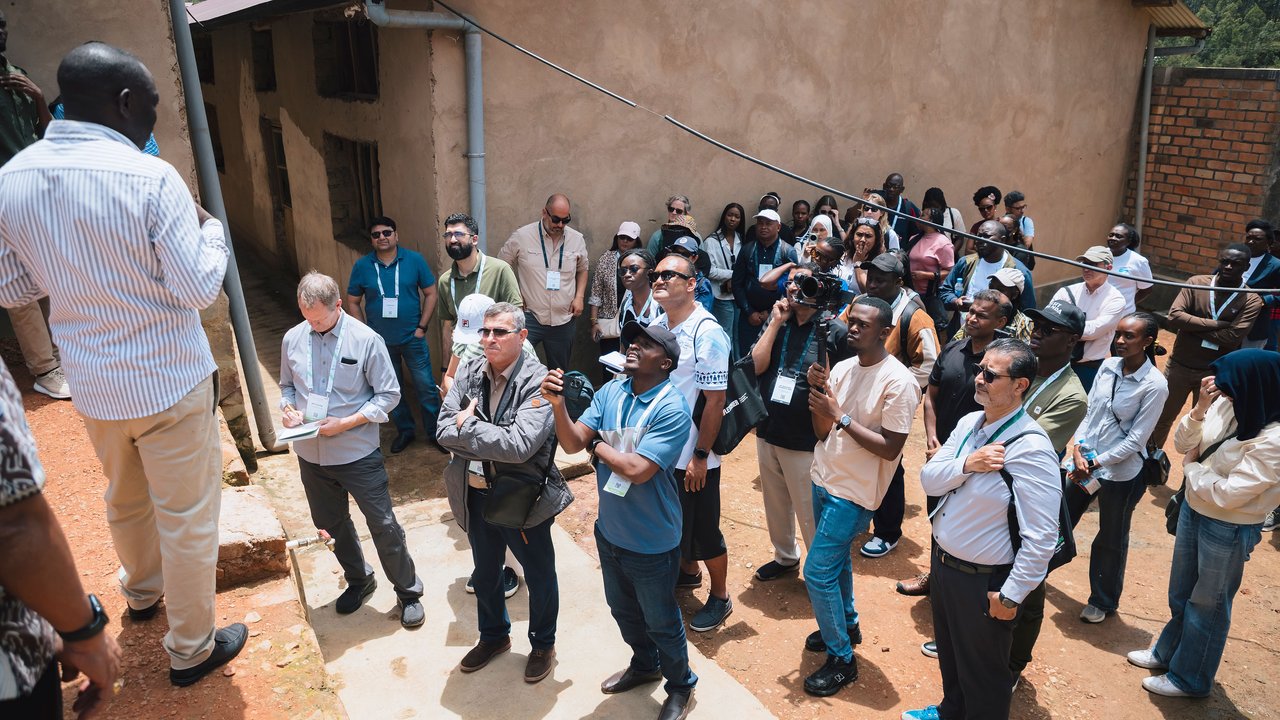
ICII 2026 field trip participants talking with Trusted Farm Ltd manager Christian Habumuremyi during their visit to the poultry farm.
At COVAMABA, premiums and claims alike go through the cooperative
COVAMABA’s ca. 3,000 members, over 40% of which are women, farm the Bahimba marshland, where the main risks are floods from the nearby Nyabarongo River, drought, and crop disease. They are organised into 168 groups. Twice a month, in the first and third week, every farmer is expected to join in communal work, and attendance lists are kept. The groups maintain water channels, dig anti-erosion terraces on the surrounding hillsides, and have worked with local government to widen the river that used to overflow onto the fields. Alongside insurance, these measures help farmers manage flood and erosion risks.
One farmer described how premiums are paid. Each group of 20 to 25 farmers collects its members’ shares and deposits them in the cooperative’s bank account, after which the cooperative pays the insurer. If a given member cannot pay on time, the cooperative covers the amount and the member repays it later. Claims follow the same process in reverse: the insurer pays the cooperative and the cooperative pays the farmers.
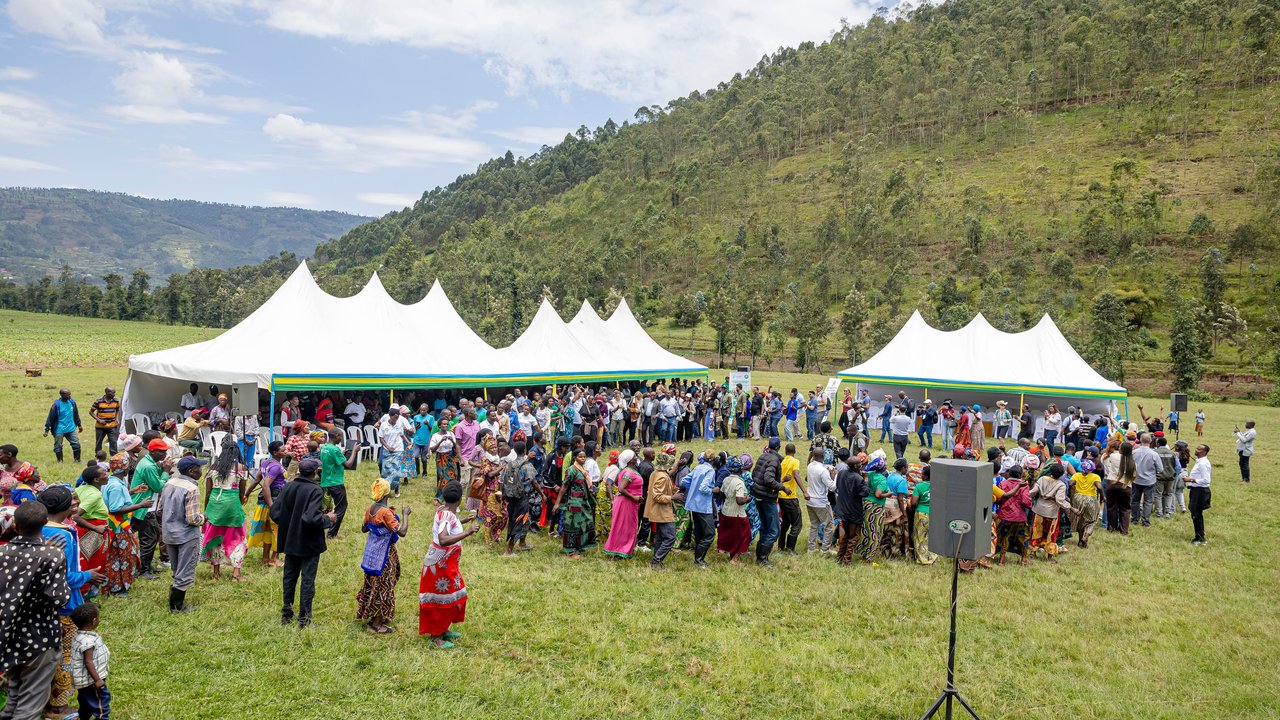
COVAMABA farmers welcome ICII 2026 field trip participants to the cooperative in Rulindo District.
Losses are assessed jointly in the field. The cooperative’s coordinator, Thacien Hakizimana, said a payout “is not money which is counted in an office”. The insurer, government and cooperative leadership inspect the damaged plots together and agree on the amount. According to the district, members have received over US$ 60,000 in payouts since 2022. The coordinator also credited the insurance scheme with supporting sustainable economic growth among the cooperative’s members.
The scheme is intended to enhance farmers’ economic resilience by providing financial protection when agricultural losses occur. One member, who has farmed there since 2014, described how severe floods and droughts repeatedly left farmers without enough capital to invest in the next season. Through the cooperative, he learnt about the insurance scheme as a way to protect their investment in farming. He has now been insured with Radiant Yacu for five years. When the first members to join received payments after losses, others soon joined.
Another member, who has farmed there since 2016 and has been insured with Radiant Yacu since 2022, also described how difficult it was to raise capital for the next growing season after a loss. Families used to sell their livestock to raise enough money to plant again. In the main growing season of 2023, her crop flooded after she had invested about US$ 136. She received US$ 148 and was able to plant for the next season without any delays.
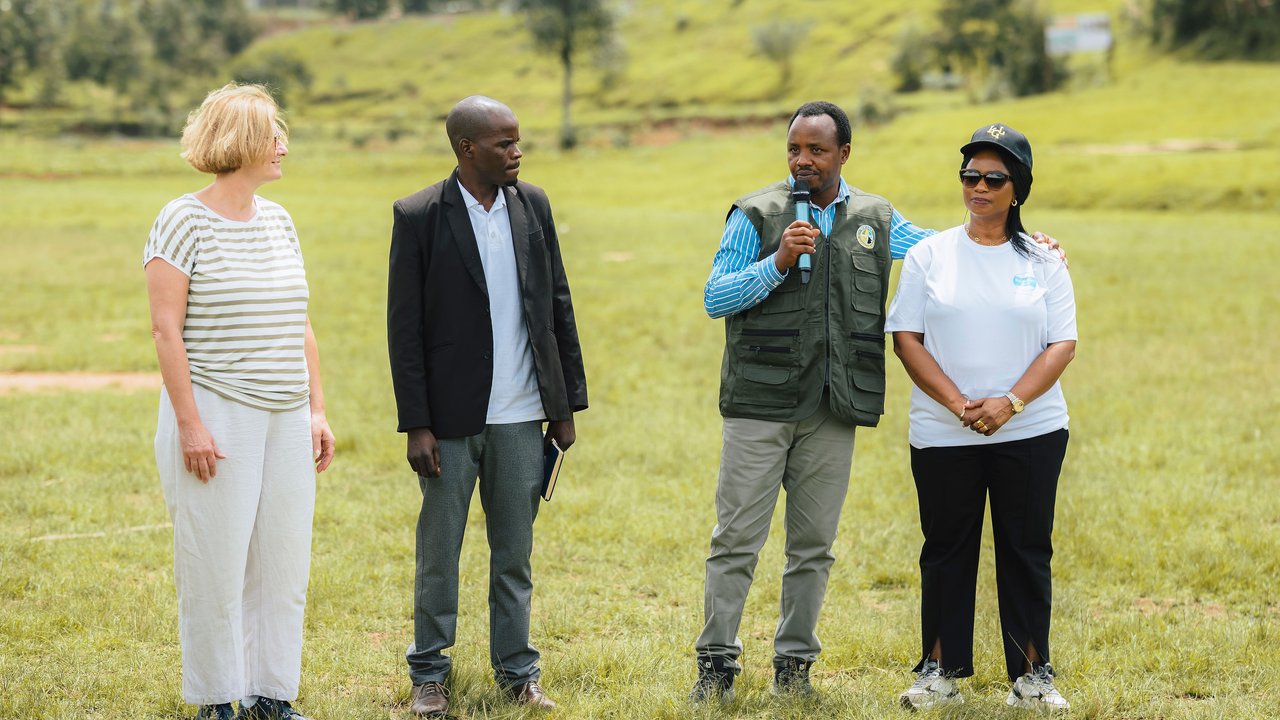
From left: Renate Bleich, Chair of the Munich Re Foundation; Thacien Hakizimana, COVAMABA’s cooperative coordinator; Joseph Ntezimana Museruka, Project Manager of NAIS at MINAGRI; and Ovia Tuhairwe, CEO of Radiant Yacu.
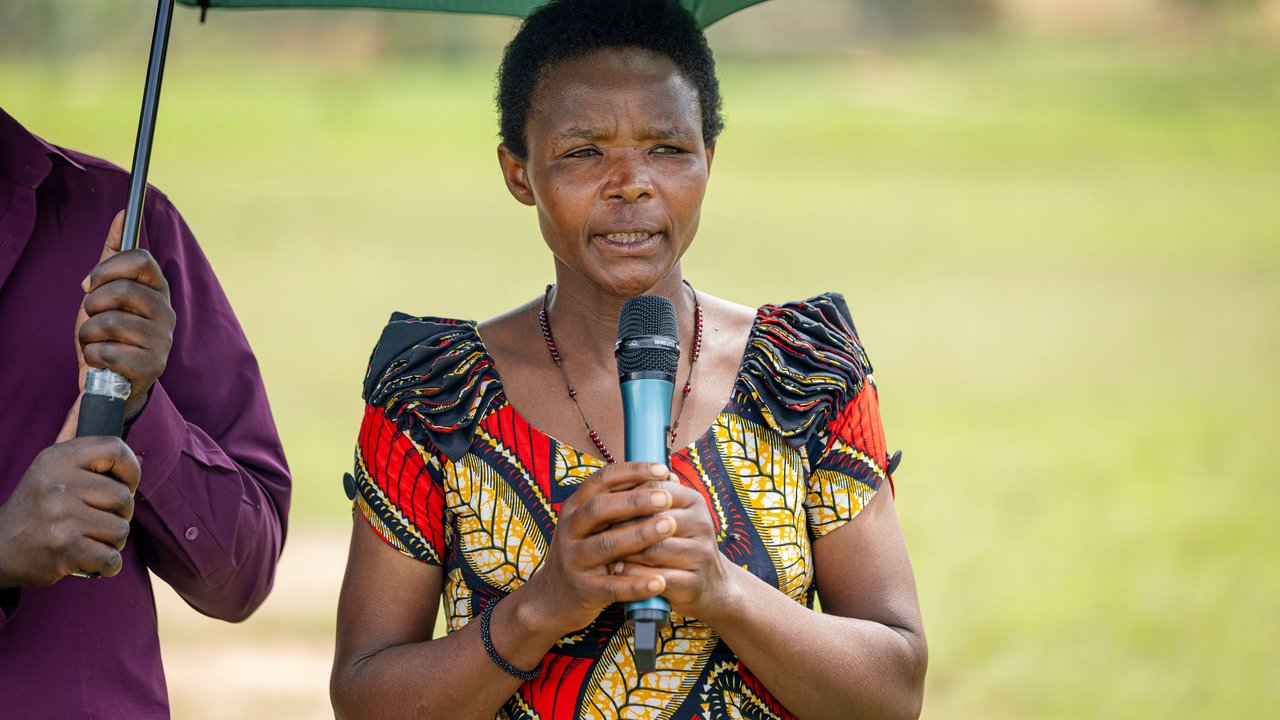
After flooding ruined her crops in 2023, this COVAMABA member received an insurance payout that enabled her to plant again the following season.
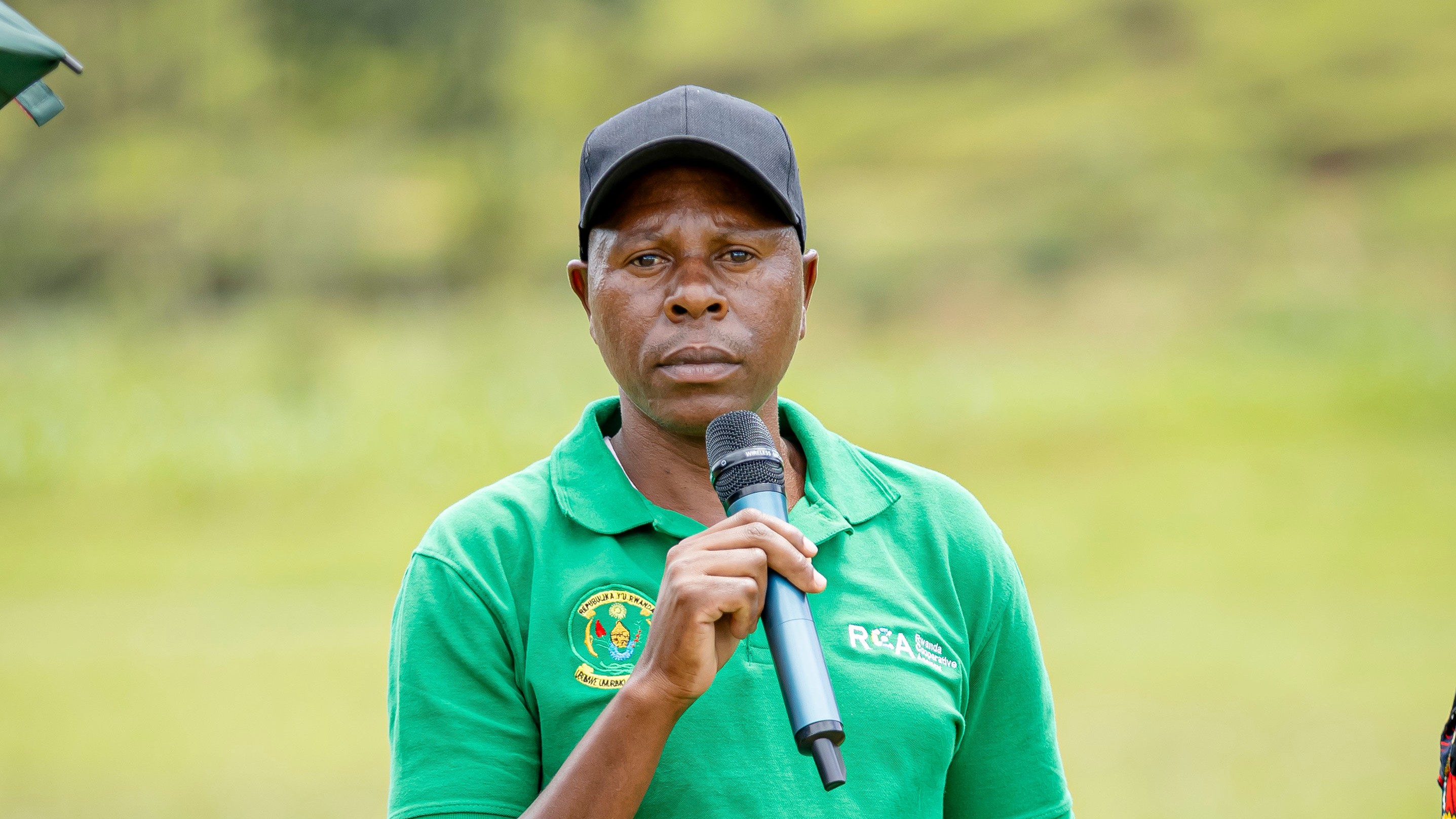
Having farmed since 2014, this COVAMABA member describes how insurance has helped protect his investment against losses from floods and droughts.
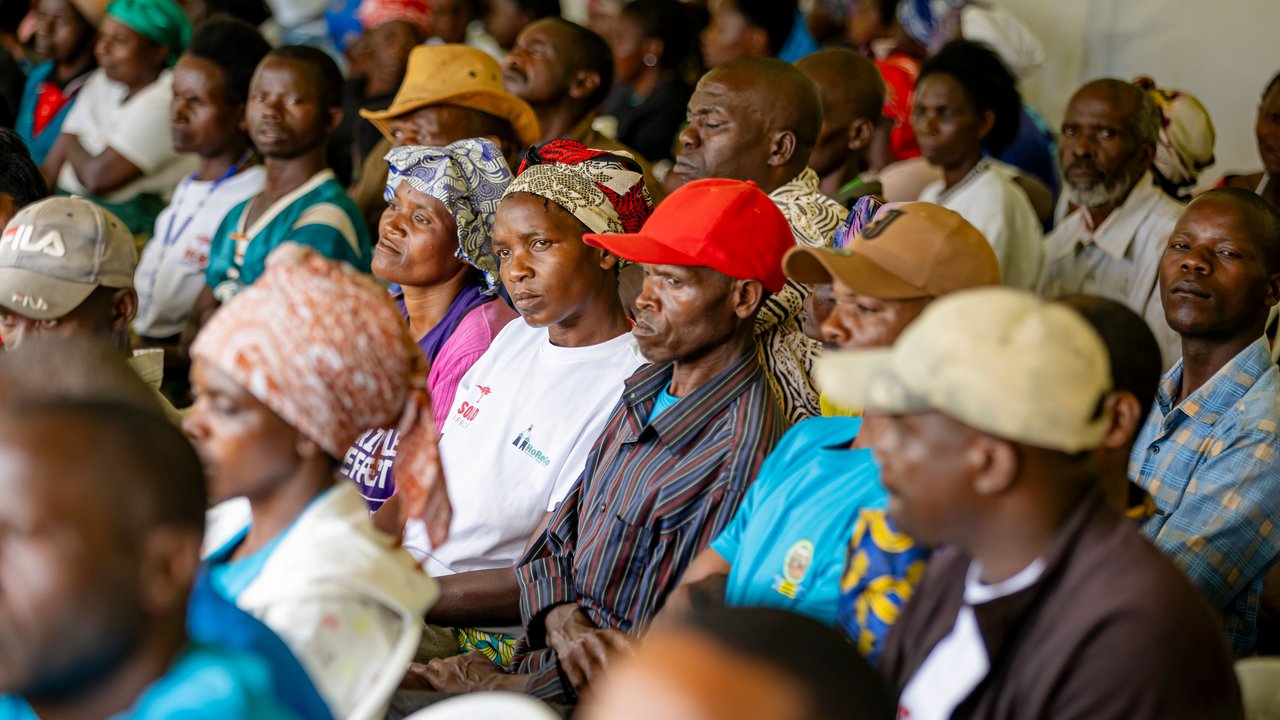
Members of the COVAMABA cooperative during the ICII 2026 field trip.
Paying claims instead of marketing
Processing a claim, which took three weeks on average in 2024, now takes only three days once the documents are complete. Radiant Yacu assigns two or three staff to each partner cooperative. Most are agronomists from the area, some with parents among the members, who visit the fields daily and provide advice on weeding, pesticides, and when to sow and harvest.
According to Ovia Tuhairwe, CEO of Radiant Yacu, the company spends little on marketing. “We market who we are, what we are capable of, through paying claims. A promise is a promise” (in Kinyarwanda, isezerano ni isezerano). Radiant Yacu was licensed as Rwanda’s first dedicated microinsurer in 2019, the same year NAIS began. The company insured a large rice cooperative in the Eastern Province. Just before harvest, the river flooded the fields and, as she put it, the farmers “harvested fish”. Radiant Yacu paid US$ 180,000. The following week, other cooperatives and private farmers came asking for cover.

Radiant Yacu CEO Ovia Tuhairwe (centre) with members of her team, including staff who work directly with partner cooperatives and farmers.
The sum insured falls short of the full value
At the cooperative, the coordinator said members would like to see cover based on the value of the harvest instead of on what they invest. At the poultry farm, the sum insured per bird has risen from US$ 3.39 to US$ 4.74, but according to Christian Habumuremyi a hen that is ready to begin laying, at about five months old, costs around US$ 7.45 to replace. When a participant suggested buying a younger bird, he explained that a day-old chick costs US$ 1.69 and must then be fed for five months. The current sum insured of US$ 4.74 per bird leaves him about a third short, and he asked for the sum insured to be raised to US$ 7.45.
Future outlook: Farmers “graduating” from the subsidy
When asked whether the poultry farm could carry the full premium if the 40% subsidy were withdrawn, Christian Habumuremyi said yes. “When you have a baby, you support the baby until the baby supports itself,” he said. “We don’t expect that the government will continue to pay 40%. We are ready to pay the total.”
Steven Biganiro of MINECOFIN explained that the government planned to implement a “graduation programme”. Farmers who can now afford the full premium would stop receiving the subsidy, and the money would go to those farmers who still need it. Ovia Tuhairwe asked the government to keep supporting the sector, because new farmers are still starting out and the scheme cannot be withdrawn while they are joining.
Box 2: Lessons from Rulindo
Click here for more details
- Visible claims payments drive uptake. At both stops, paid claims are what brought in new members.
- Risk control is part of the product. Vets employed by the insurer and the cooperative, vaccination as a condition of cover, and twice-monthly community work all reduce losses before they become claims.
- COVAMABA handles premiums and claims. Money flows through 168 groups and one cooperative account, and the cooperative advances premiums for members who are short on cash.
- Current cover leaves a gap. The poultry sum insured is US$ 4.74 against a replacement cost of about US$ 7.45, and crop cover does not reflect the value of the harvest.
- Subsidy graduation needs clear rules. Some farmers are ready to pay the full premium, while new entrants still depend on the subsidy.
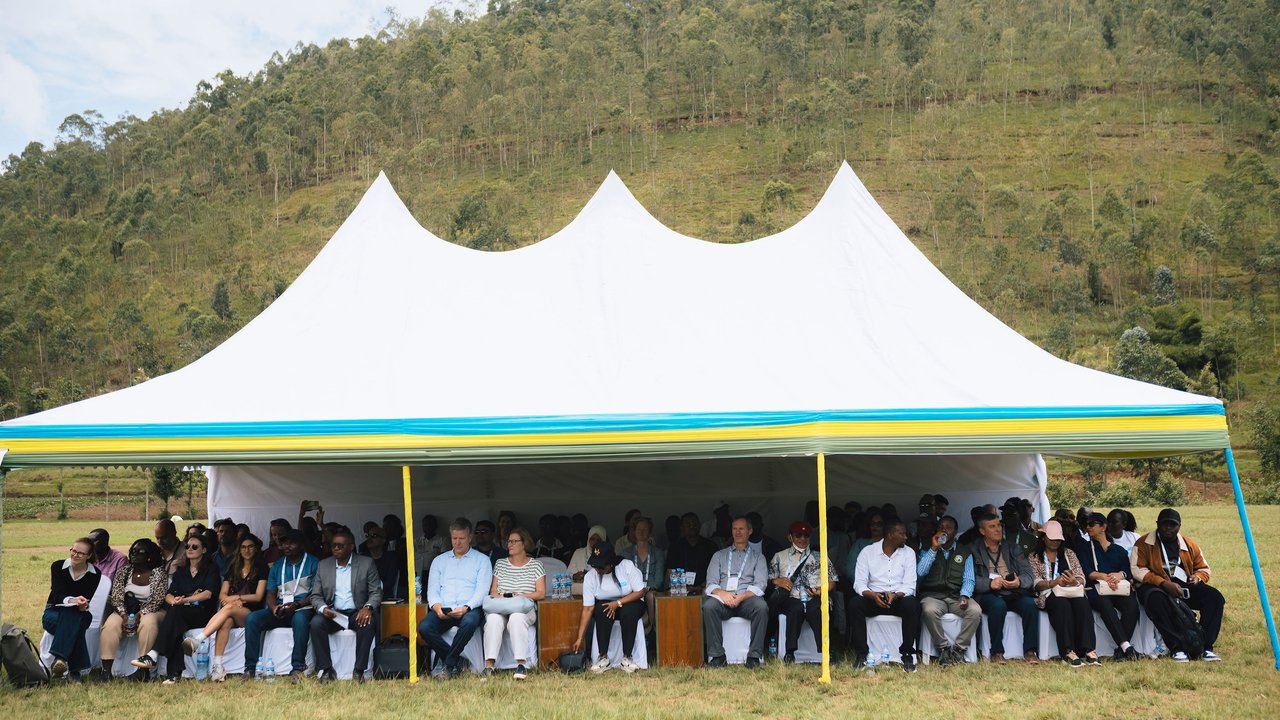
ICII 2026 field trip participants learning from members of the COVAMABA cooperative.