International Conference on Inclusive Insurance 2025
Summary
13 - 17 October 2025
Quito, Ecuador
Accelerating growth and viability in Latin America and beyond
By Renate Bleich and Rishi Raithatha*
Between 13 and 17 October 2025, over 430 participants from 47 countries attended the 21st International Conference on Inclusive Insurance (ICII) 2025 in Quito, Ecuador. This year’s event saw the return of the ICII to South America after last being held in 2017 in Peru. The ICII 2025 was organised by the Federación Ecuatoriana de Empresas de Seguros (FEDESEG), the Junta de Política y Regulación Financiera (JPRF), the Superintendencia de Compañías, Valores y Seguros, in cooperation with the Munich Re Foundation and the Microinsurance Network.
.jpg/_jcr_content/renditions/original.image_file.4583.2901.741,299,5324,3200.file/ICII2025_Slideshow_Tuesday_Plenary1(1).jpg "ICII2025_Opening")
Opening of the ICII 2025
Left to right: Matthew Genazzini, Executive Director, Microinsurance Network, Luxembourg; Renate Bleich, Chair, Munich Re Foundation, Germany; Sariha Moya, Minister of Finance and Delegate of His Excellency President Daniel Noboa, Ecuador; Luis Alberto Cabezas-Klaere, Superintendent of Companies, Securities and Insurance, Ecuador; Juan Manuel Merchán, President of FEDESEG, Ecuador
.jpg/_jcr_content/renditions/original.image_file.1784.1162.128,114,1912,1276.file/ICII2025_Slideshow_Tuesday_Plenary3(1).jpg "ICII2024_Plenary3")
Plenary 3 - Lessons learned from microinsurance development in Ecuador
Hosted by FEDESEG
.jpg/_jcr_content/renditions/original./ICII2025_Slideshow_Tuesday_Plenary3(3).jpg "ICII2025_Plenary3")
Plenary talk by Roque Sevilla, Founder and President of the Grupo Futuro
Plenary 3
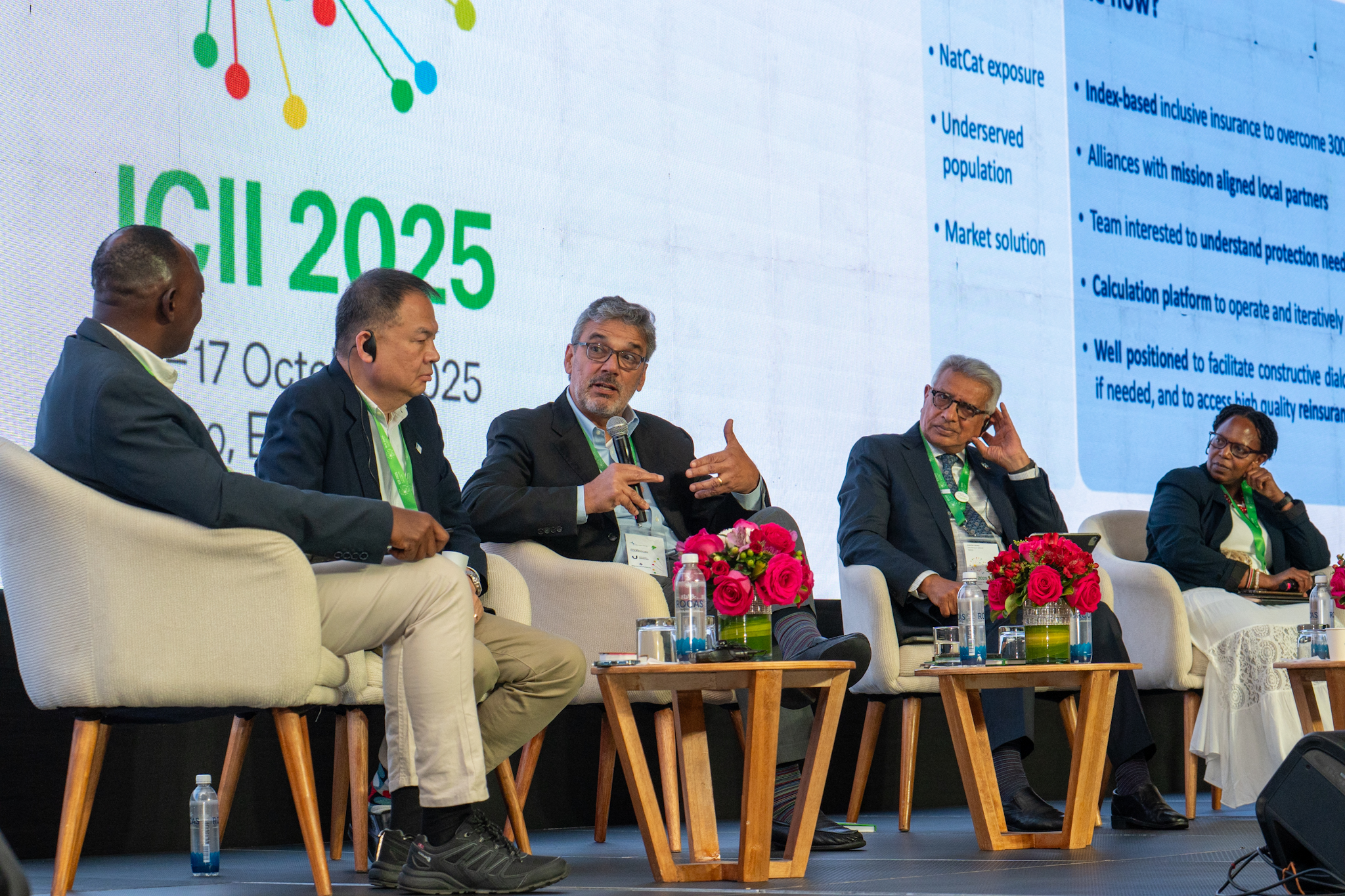
Parallel session 7 - Profit with purpose: client centricity, innovation and business viability
Hosted by FinProbity Solutions
.jpg/_jcr_content/renditions/original./ICII2025_Slideshow_Wednesday_PS5(1).jpg "ICII2025_PS5")
Parallel session 5 - From gap to growth: empowering women through inclusive insurance in Latin America
Hosted by RUS
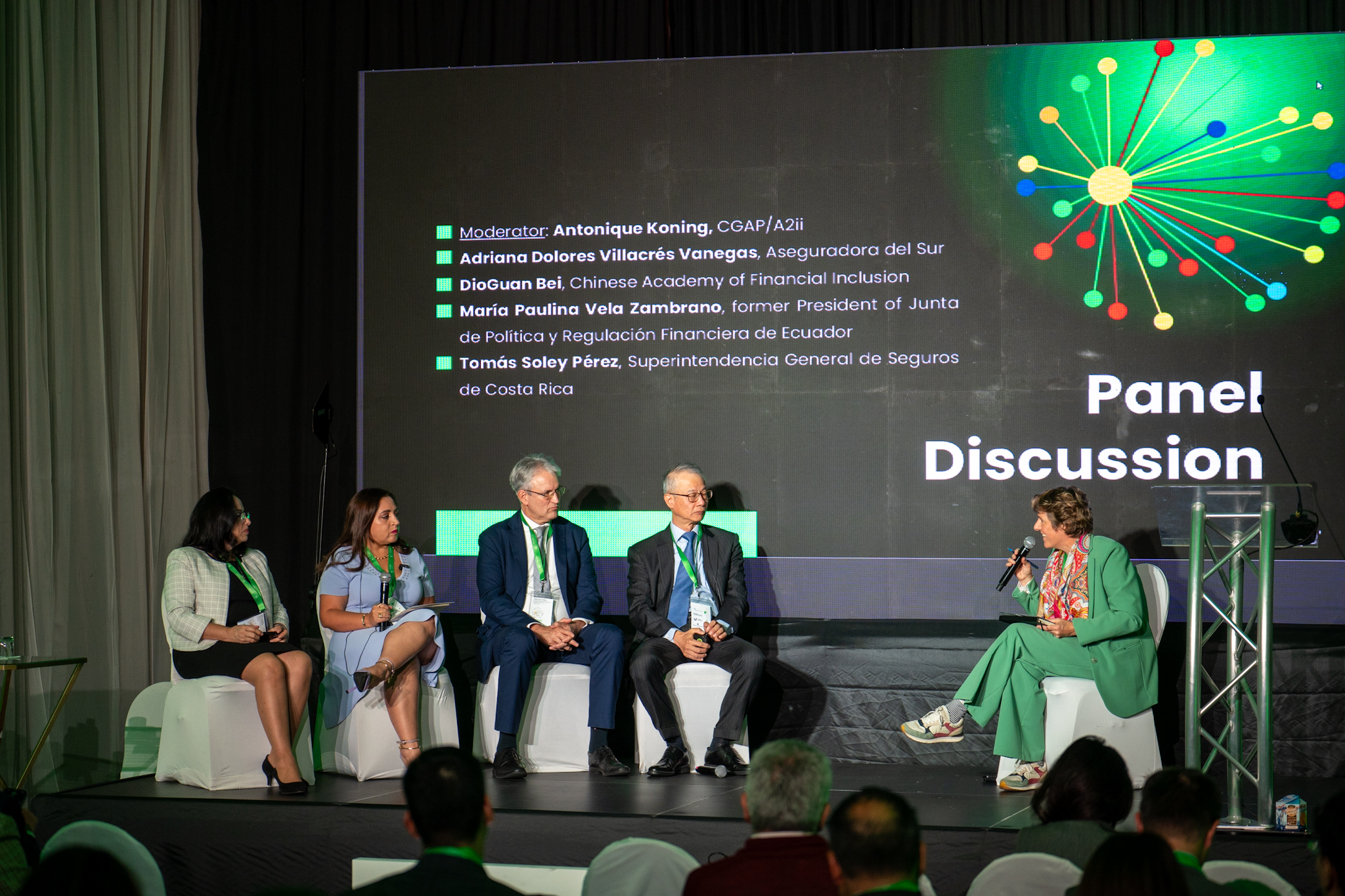
Pre-conference Workshop 2 - Consultative Forum: Incentives for the industry –how can insurance supervisors encourage insurers to reach underserved populations
Hosted by a2ii, CGAP, IAIS, Microinsurance Network
.jpg/_jcr_content/renditions/original./ICII2025_Slideshow_Tuesday_Plenary2(2).jpg "ICII2025_Plenary2")
Plenary talk by Sara Orozco Londoño, Landscape Programme Coordinator of the Microinsurance Network Colombia
Plenary 2
.jpg/_jcr_content/renditions/original./ICII2025_Slideshow_Tuesday_Plenary2(1).jpg "ICII2025_Plenary2")
Plenary 2 - The landscape of microinsurance in LATAC: live data, smart decisions, resilient futures
Hosted by Microinsurance Network
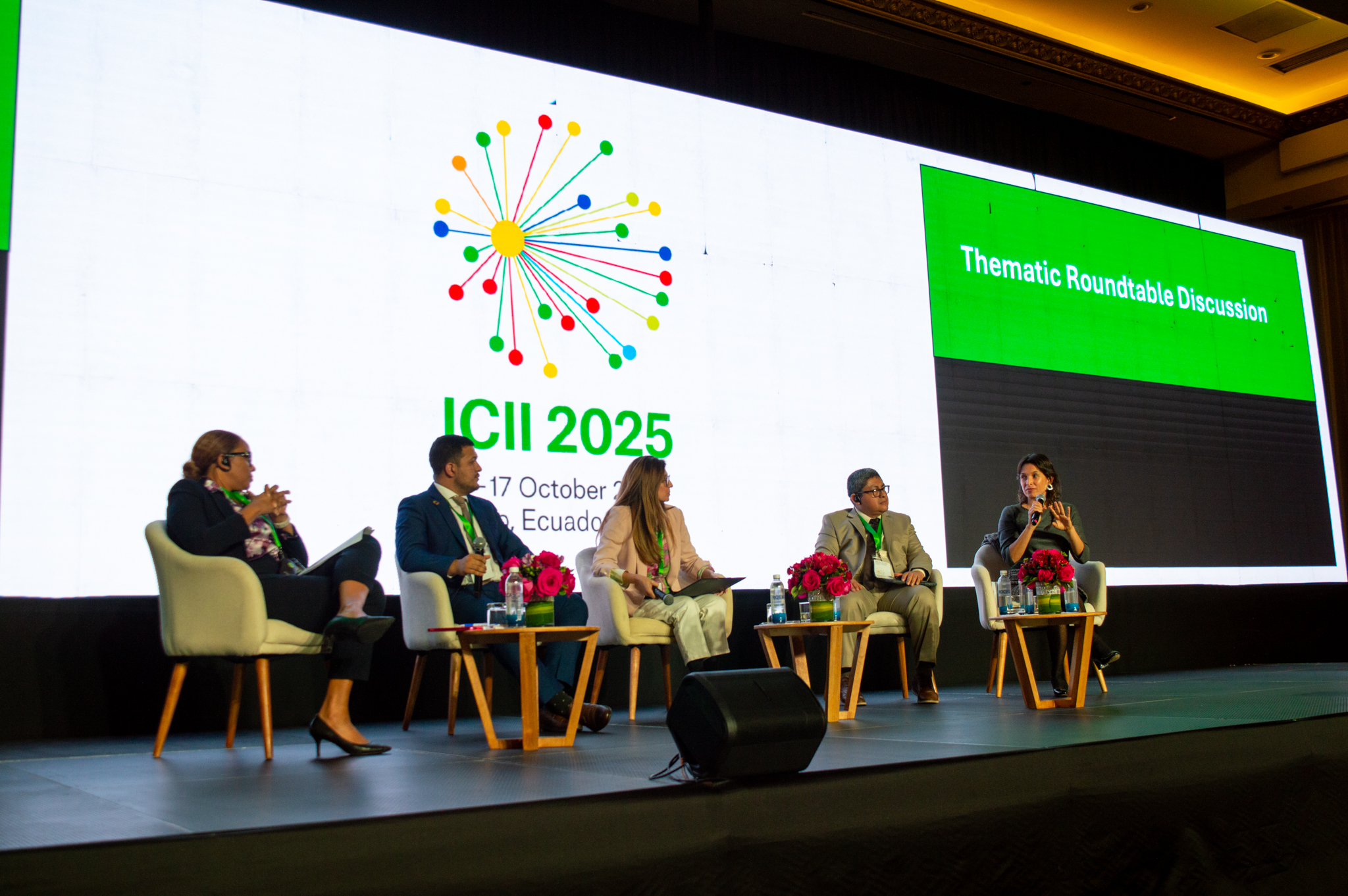
Parallel session 10 - Bridging Risk Protection Gaps: Scaling up inclusive insurance through public–private partnerships – from Central to South America
Hosted by WFP
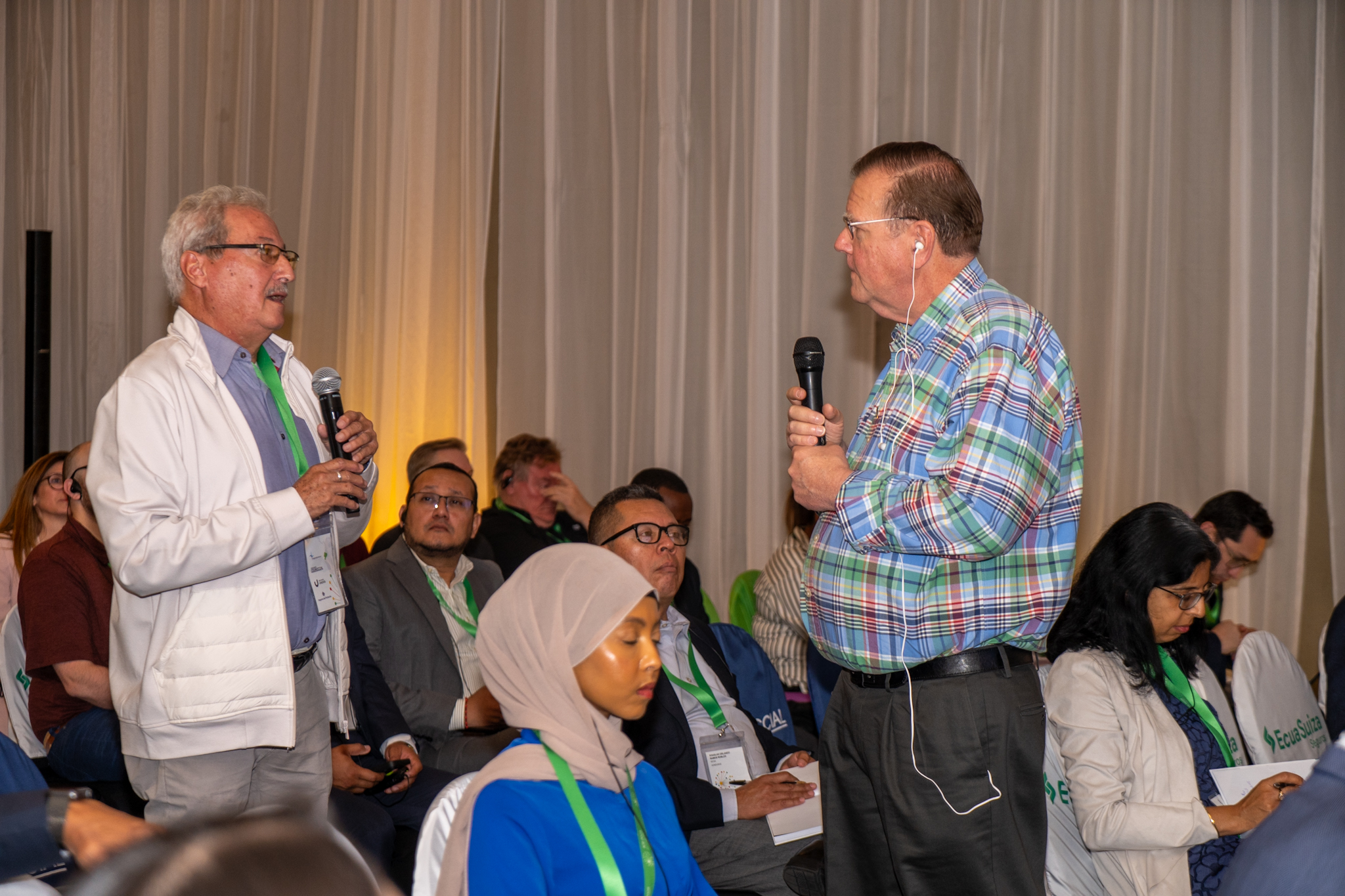
Facilitator Michael McCord (pictured on the right), Managing Director of the Microinsurance Centre at Milliman, leads a discussion with the audience
Parallel session 6
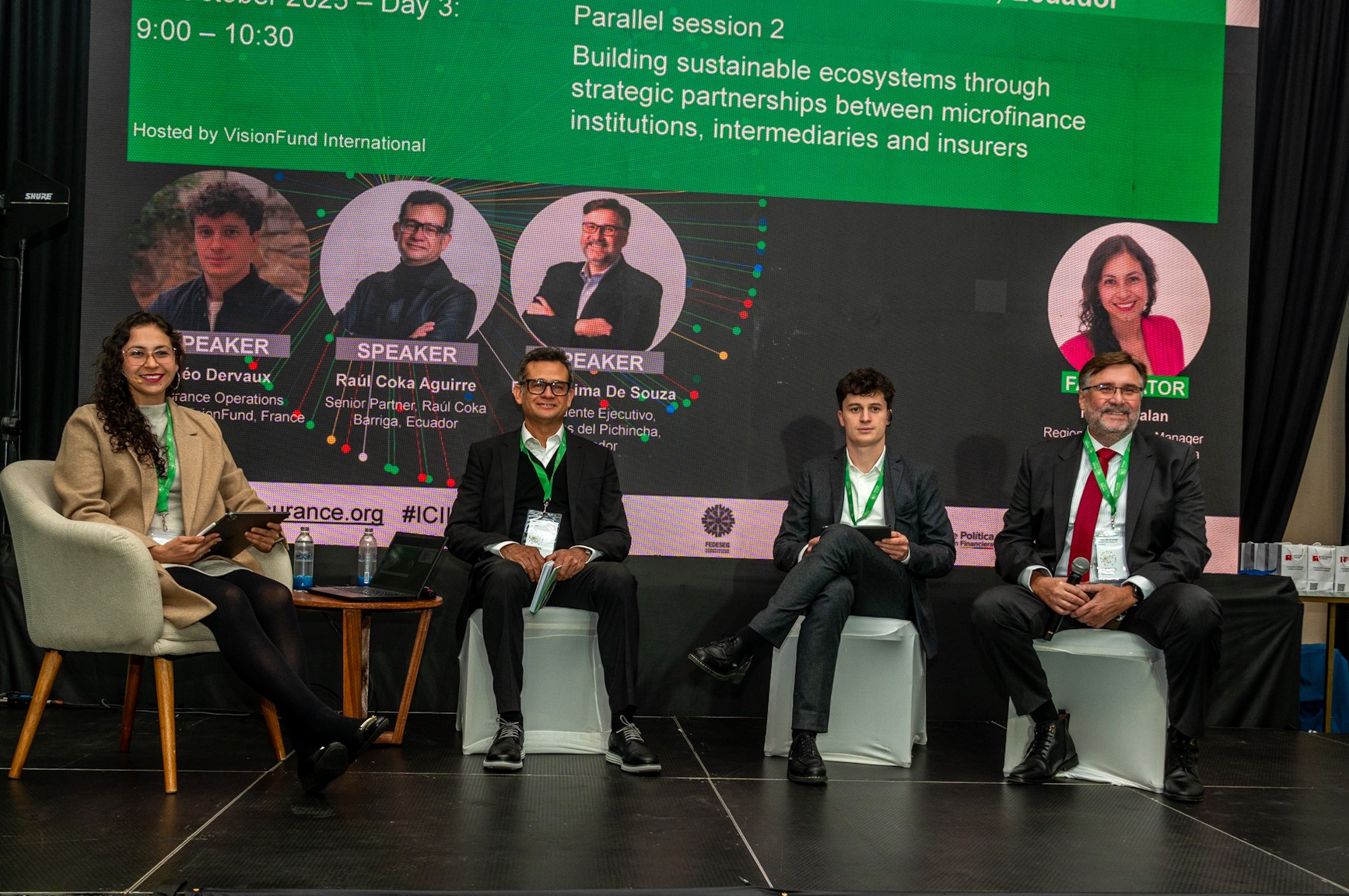
Parallel session 2 - Building sustainable ecosystems through strategic partnerships between microfinance institutions, intermediaries and insurers
Hosted by VisionFund International
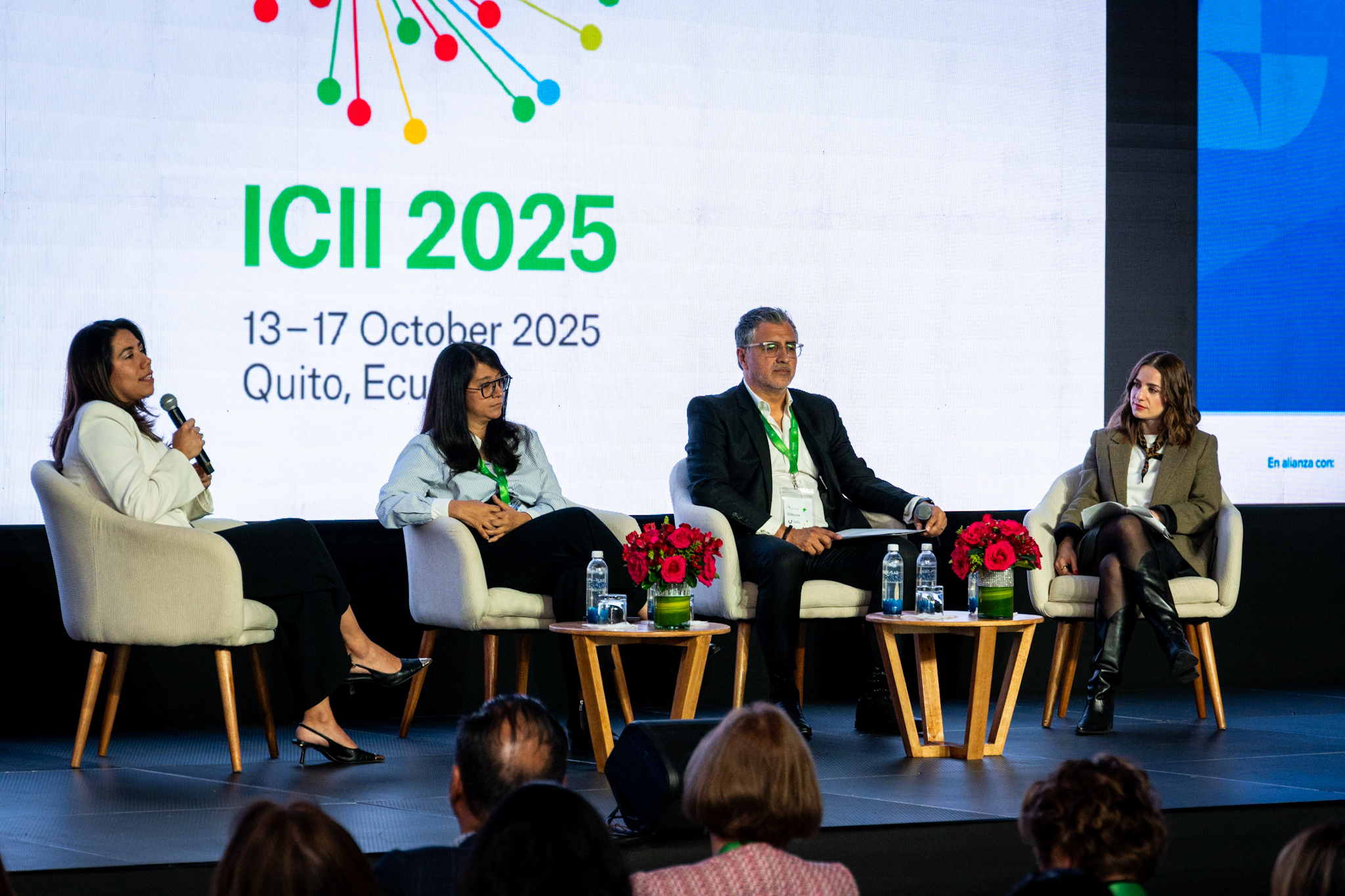
Plenary 5 - Tech with purpose: Inclusive Insurance Innovation in Latin America
Hosted by Alianza Insurtech Panamericana
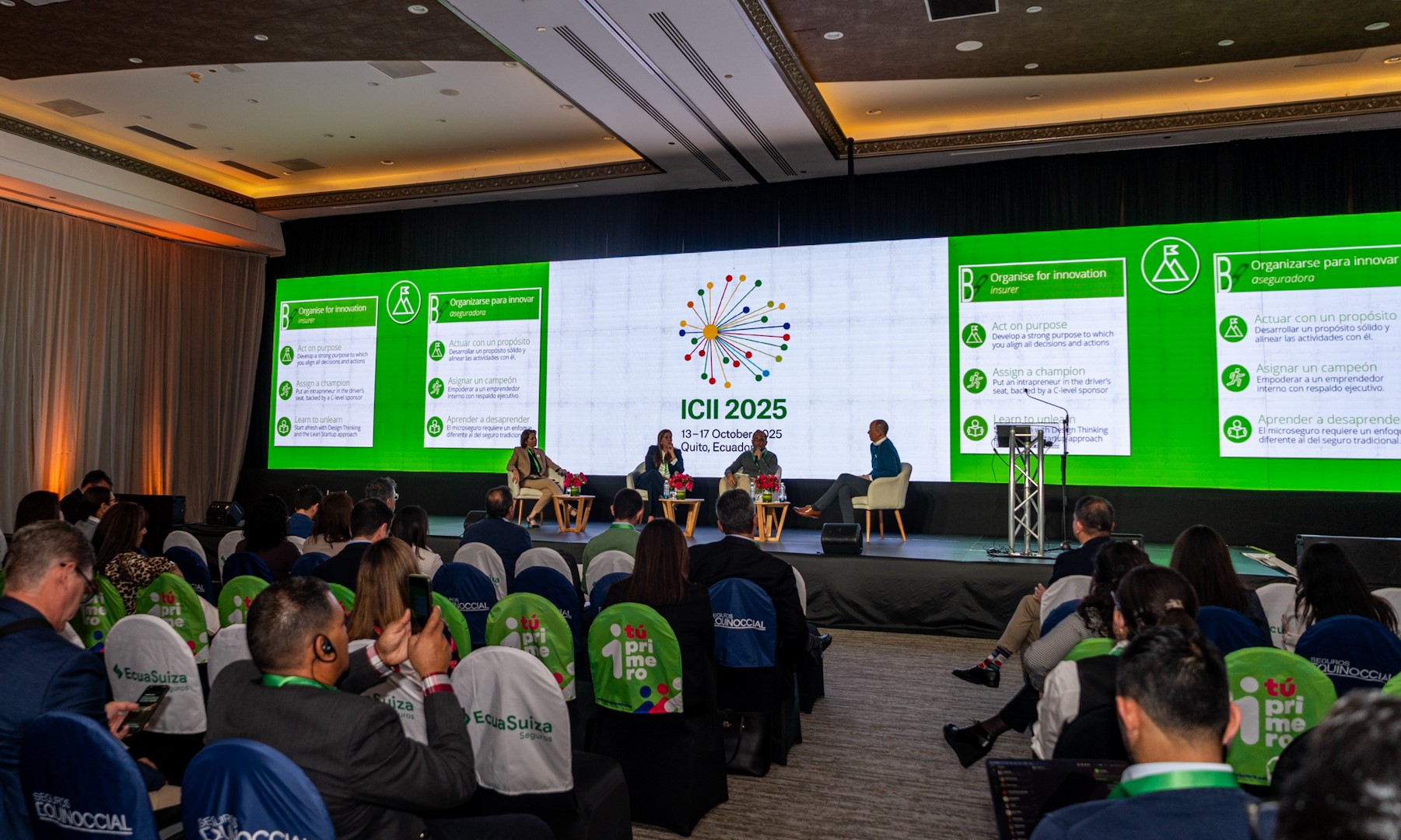
Parallel session 1 - Business cases for microinsurance across the value chain in Latin America
Hosted by Microinsurance Master
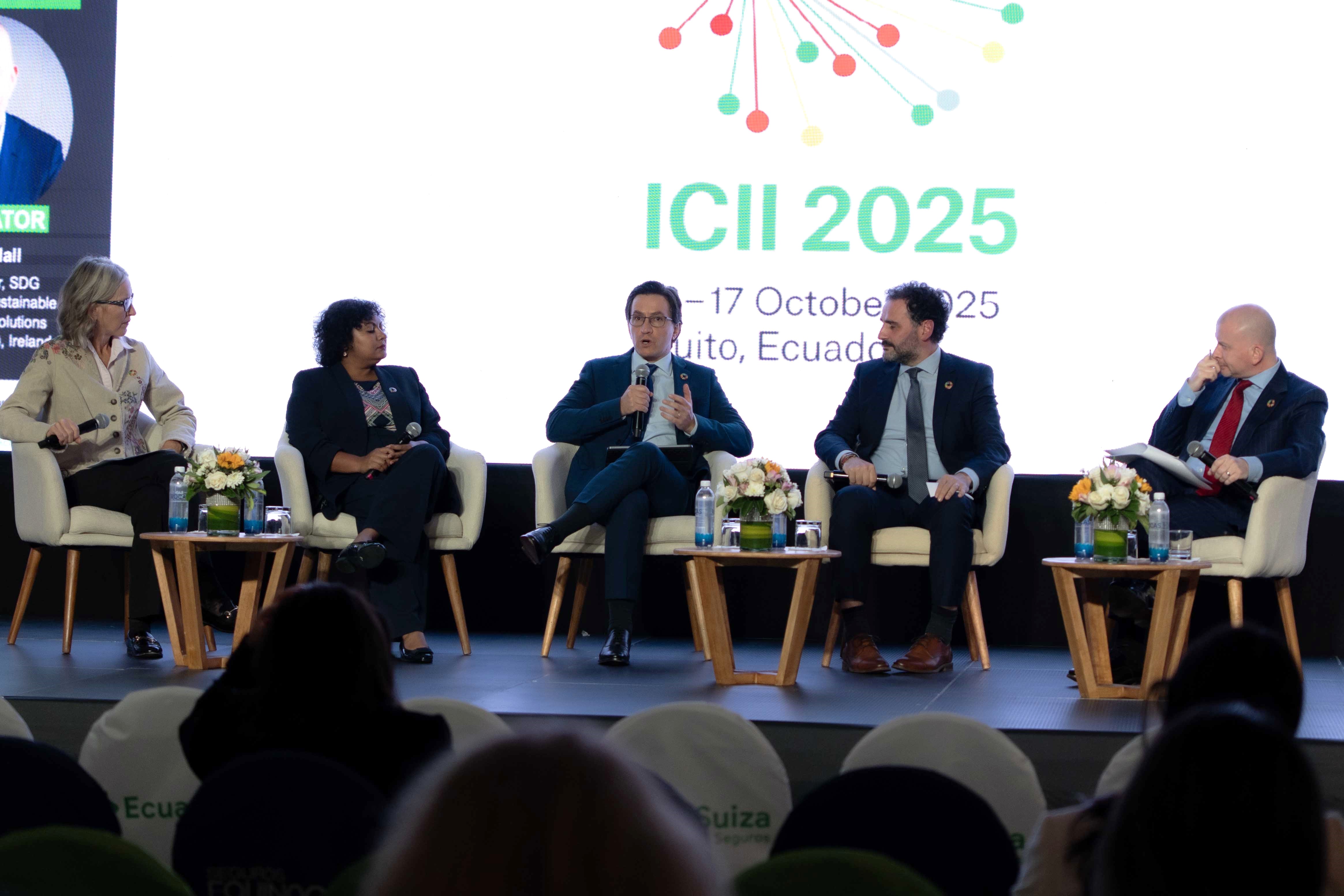
Plenary 4 - Insurance and Sustainable Development: partnering on risk, resilience and transformation
Hosted by UN Sustainable Development Solutions Network
.jpg/_jcr_content/renditions/original./ICII2025_Slideshow_Wednesday_PS5(2).jpg "ICII2025_PS5_Audience")
Audience of parallel session 5

Parallel session 3 - Inclusive health insurance: successes and failures in Latin America and beyond
Hosted by ILO and RUS
.jpg/_jcr_content/renditions/original./ICII2025_Slideshow_Tuesday_Plenary3(2).jpg "ICII2025_Opening_Audience")
Audience of the opening session
.jpg/_jcr_content/renditions/original./ICII2025_Slideshow_Thursday_Closing(1).jpg "ICII2025_Closing")
Closing and outlook of the ICII 2025
Left to right: Lorenzo Chan, CEO, Pioneer, The Philippines / Chair of the Board, Microinsurance Network, Luxemburg; Steven Biganiro, Director General of Capital Markets and Investment Schemes, MINECOFIN, Rwanda; Patricio Salas, Executive Secretary, FEDESEG, Ecuador; Dirk Reinhard, Vice Chair, Munich Re Foundation, Germany
.jpg/_jcr_content/renditions/original./ICII2025_Slidewhow_Thursday_Closing(3).jpg "ICII2025_Closing_Rwanda")
Speaker panel of the closing and outlook session of the ICII 2025, together with the delegation from Rwanda, host of ICII 2026
.jpg/_jcr_content/renditions/original./ICII2025_Slideshow_Thursday_Delcaration(1).jpg "ICII2025_Declaration_Signing")
Signing of the five guiding principles for inclusive insurance in Ecuador
.jpg/_jcr_content/renditions/original./ICII2025_Slideshow_Thursday_Delcaration(2).jpg "ICII2025_Declaration")
High-level meeting between Ecuadorian public institutions, private companies, and multilateral organizations
_new.jpg/_jcr_content/renditions/original./ICII2025_Quote_Moya_Tuesday_Plenary1(2)_new.jpg "ICII2025_Quote_Moya")
Ecuador and Latin America face shocks linked to climate, geopolitics, and economic challenges that threaten state revenues and health systems. Our conviction is clear: economic policy must serve to reduce risks, not only to manage budgets.
A sector at an inflection point
Against growing climate volatility and geopolitical uncertainty, this year’s opening session highlighted the need to make insurance relevant for all. Sariha Moya, Finance Minister of Ecuador, outlined Ecuador’s action agenda, focusing on regulation, suitable products and bringing insurance to people in need of protection. She reaffirmed that economic policy must reduce risks and translate financial inclusion into real protection. Juan Manuel Merchán, the President of FEDESEG, highlighted the role of insurance in reducing vulnerability and outlined Ecuador’s commitment to microinsurance, with new regulations launched in 2024. He called for collaboration between regulators and insurers to promote sustainable growth and social impact. This sentiment for inclusivity was supported by Luis Alberto Cabezas-Klaere from the Superintendency of Companies, Securities and Insurance, Ecuador: insurance should not be a privilege, but a right. He stressed solidarity and inclusion, urging the sector to extend coverage to those still excluded. For many communities in the region and beyond, protection remains elusive, stunting livelihoods and recovery from shocks.
_new.jpg/_jcr_content/renditions/original./ICII2025_Quote_Merchan_Tuesday_Plenary1(2)_new.jpg "ICII2025_Quote_Merchan")
In our global scenario, insurance is more necessary than ever – especially in the face of instability and climate changes we are facing.
Embedding insurance in Latin America’s future
Ecuador’s insurance ecosystem offers both challenges and inspiration: over 70% of the country’s citizens lack formal coverage. Yet, industry leaders outlined a pathway: embedding inclusive insurance with other products and services should be complemented with innovation and empathy to bridge the protection gap. Education, simple products and procedures, transparency, and public-private collaboration are key to reach vulnerable groups and advance inclusion. A successful example is the CampoSeguro Programme in Ecuador, offering agricultural insurance for small and medium-sized producers, promoted and subsidized by the Ministry of Agriculture. Since 2022, CampoSeguro has benefited 48,261 small and medium-sized producers with a subsidy of up to 60%, insuring 94,449 hectares of agricultural land.
.jpg/_jcr_content/renditions/original./MRF_ICII25_Summary_Chart02(2).jpg "ICII2025_Graph_indicators_ecuador")
Figure 1: Key indicators on inclusive insurance in Ecuador
Source: Sariha Moya, Plenary 1, Keynote speech during the Opening Ceremony, ICII 2025
_new.jpg/_jcr_content/renditions/original./ICII2025_Quote_Salas_Tuesday_Plenary3(1)_new.jpg "ICII2025_Quote_Salas")
Building inclusive insurance mechanisms is not only about risk protection. It’s about fostering a more equitable, resilient, and supportive society.
_new.jpg/_jcr_content/renditions/original./ICII2025_Slideshow_Tuesday_Plenary1(2)_new.jpg "ICII2025_Quote_Cabezas-Klaere")
When I bought my first car, my father insisted on taking out insurance. He did not allow me to drive without cover. We need more education and awareness about the benefits of insurance.
The Landscape of Microinsurance in Latin America and the Caribbean (LATAC)
As is customary, the first session after the conference opening was on the Landscape of Microinsurance. The ICII 2025 saw the official launch of the Regional Report on Latin America and the Caribbean by the Microinsurance Network, presenting the latest insights on products, coverage, regulation, and distribution across the region. The report covers 11 countries, compiling data from 80 insurance companies that report 345 products. These products cover 37.3 million people, generating about USD 832 million in gross premiums. However, this represents only 7% of the total population across the 11 countries, highlighting the significant protection gap that remains due to fragmented distribution, unresolved regulatory barriers in some markets and inadequately tailored products. The potential market is estimated at 406 million people, with a total value of USD 16.9 billion.
Across Latin America and the Caribbean, the diversity of political and economic systems means insurance inclusion strategies must be tailored to each country’s context. Successful examples—such as Peru’s alternative distribution channels and Colombia’s innovation labs—show how localized approaches can drive progress. Collaboration with sectors like agriculture and housing helps identify vulnerable groups and design scalable, relevant products. Meanwhile, proportional regulatory models, including Uruguay’s flexible policies and Brazil’s simplified frameworks, are fostering innovation and expanding inclusive insurance across the region.
.jpg/_jcr_content/renditions/original./MRF_ICII25_Summary_Chart01(2).jpg "ICII_2025_Graph_Global-vs-LATAC")
Figure 2: Comparison between Global and LATAC figures
Source: Sara Orozco Londoño, Microinsurance Network presentation on the Landscape of Microinsurance Study 2024, ICII 2025
Technology, trust and the client at the centre
Digital tools were an important part of several discussions at the conference. The use of emerging technology remains an important driver for inclusive insurance to achieve scale and efficiency. Several examples shed light on this. Among them, Ecuador’s rollout of electronic pamphlets and China’s digital infrastructure for agricultural insurance were highlighted for reducing costs and boosting accessibility. Using existing platforms, such as WhatsApp, for distribution and frictionless payments are more than just technical upgrades: they are essential to reach underserved users.
Adopting technology is not enough. Meaningful transformation in the microinsurance sector should ensure that digital-first products are aligned with the culture target customers are used to. Alignment between stakeholders over how digital microinsurance should work is key: this is necessary to ensure a co-operative partnership to drive scale. Partnerships with sustainability at the core should be the norm. For this to happen, there needs to be a change in how product design is carried out, as well as in the mindsets of the partners involved. Inclusive insurance providers and their partners should “do new things together” and favour innovation over introspection.
While digital tools can help drive scale, established channels are still necessary for distribution. Brokers and microfinance institutions (MFIs) remain close to clients, understand their unique needs and offer products tailored for vulnerable populations. In Latin America, as in other regions, MFIs act as trusted bridges. They ensure accessibility and trust between insurers, and the underinsured. Strategic approaches are necessary for effective distribution: bundled or embedded and policies should be based on clear insurable interest and robust consumer protection. As exemplified by Inmedical in Ecuador, high-quality customer service should accompany microinsurance products.
Partnerships, policy and public-private synergy
Over the years, the ICII has served as a platform for organisations to ultimately partner with others. Success in inclusive insurance highly depends on productive partnerships. Several cases from Latin America were showcased. Co-creation between Banca de las Oportunidades and the insurance sector in Colombia, and Costa Rica’s push for inclusive dialogue among the industry were notable examples. In Latin America, as in other regions where inclusive insurance is growing, public sector enablement combined with private sector innovation can improve the chances of achieving real impact.
Governments have an important role to play too, from enacting policies to enforcing consumer protection rules, and ensuring an enabling environment. This is an important, foundational requirement: private sector innovation can only thrive if regulations encourage and permit this. In addition, inclusive insurance – particularly for agriculture – remains reliant on premium subsidies. Participants contracted India’s example, with robust sensitisation budgets and premium support at both the federal and state level, with Colombia’s approach in using insurance to lower credit interest rates.
_new.jpg/_jcr_content/renditions/original./ICII2025_Quote_Pinto_Wednesday_PS12%20(2)_new.jpg "ICII2025_Quote_Cabezas-Klaere")
Government subsidies promote inclusion, but they must be smart. They should generate real transformational change in people’s lives and ensure that the product itself remains sustainable.
Regulatory innovation and pathways forward
A recurring theme across the event was that regulation should continue to enable progress, not impede. The IAIS highlighted how parametric frameworks and flexible legislative interpretations in Argentina, Panama, Peru and Uruguay have led to the emergence of new product classes. Despite this, significant data gaps and “basis risk” remain hurdles – especially in agricultural insurance.
Climate resilience and holistic risk management
Several sessions considered the ongoing impact of climate change, as well as the growing in frequency and intensity in climate shocks and natural hazards. Morocco was pointed out as a blueprint for disaster risk financing. Its parametric-based Solidarity Fund against Catastrophic Events (FSEC) is a public-private financial risk instrument, which includes catastrophe risk insurance. In 2023, FSEC received a $275 million insurance payout after being triggered by a powerful earthquake.
Lessons from Colombia, Costa Rica, India and South Africa stressed the need for holistic risk management. Insurance should go beyond payouts: risk mitigation offers real value, as does community-level adaptation. A possible paradigm shift should position insurance as the final step in a risk management strategy, after mitigating all possible underlying risks. In South Africa, Lumkani bundles insurance with a loud fire alarm for slum dwellers, which is designed to limit the spread of a fire. Prevention is often more cost-effective than protection – this should be a sectoral priority.
_new.jpg/_jcr_content/renditions/original./ICII2025_Quote_Camargo_Wednesday_PS6%20(2)_new.jpg "ICII2025_Quote_Camargo")
There is a need for the insurance industry to shift its products from a luxury positioning to accessible, adaptive risk reduction mechanisms. Continue to develop public-private partnerships to develop affordable solutions.
Measuring impact and building evidence
Several speakers expressed the need to continue putting more effort in to substantiate the benefits of insurance. Impact measurement, financial education and rigorous evidence are necessary to expand market reach. These ingredients can also drive better product design to serve more and diverse communities. Beyond developing affordable and accessible products, a good customer experience can generate real impact. A product with efficient processes and for which claims are paid quickly can be beneficial – both for customers and inclusive insurance providers.
Box 1: How the ICII aims to catalyse change in Ecuador
At the end of the event, Ecuador’s inclusive insurance stakeholders took an important step forward in closing the protection gap. A high-level meeting brought together key players from the public and private sectors, international organisations and regulators. The outcome of this dialogue was five guiding principles, which define the next steps towards growing inclusive insurance in Ecuador:
Click on the headlines for more details
1. Accessibility
2. Financial education
3. Technology and innovation
4. Public-private collaboration
5. Sustainability and risk management
Closing reflections: Towards a more inclusive insurance future
With over 90 speakers, the event offered the inclusive insurance sector in Latin America to highlight its successes, while learning from other global experience. The event affirmed that inclusive insurance is more than a niche sector: it is a core enabler of resilience, equity and sustainable development.
Click here for information on the ICII 2026, scheduled to take place in Kigali, Rwanda, from 19 to 23 October 2026.
*The authors would like to thank the Rapporteur Team of the ICII 2025!
Photo credit: Federación Ecuatoriana de Empresas de Seguros (FEDESEG)